If you’ve spent any time texting, scrolling social media, or chatting online, you’ve probably come across the abbreviation “TF.”
It’s short, punchy, and often used in emotional or expressive conversations. But what does it actually mean? That’s exactly why so many people search for it.
“TF” is one of those internet slang terms that can shift meaning depending on tone, context, and platform.
It might express confusion, frustration, excitement—or simply act as emphasis in a sentence.
Because it’s informal and widely used across different digital spaces, understanding it can help you better interpret messages and avoid miscommunication.
In this article, you’ll learn everything about “TF”—from its core meaning to how it’s used in chats, social media, professional contexts, and even technical fields.
By the end, you’ll not only understand what it means but also when and how to use it appropriately.
Meaning & Definition
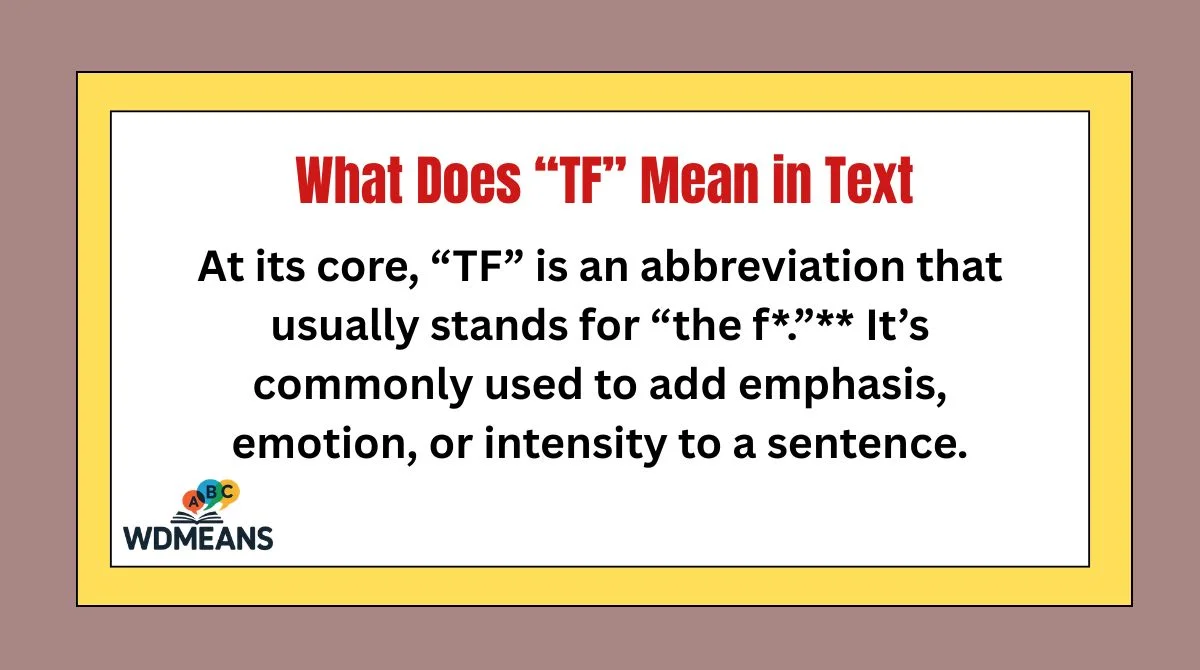
At its core, “TF” is an abbreviation that usually stands for “the f*.”** It’s commonly used to add emphasis, emotion, or intensity to a sentence. While the full phrase contains a swear word, the abbreviation softens it slightly, making it more acceptable in casual communication.
For example:
- “What TF is going on?” → expresses confusion or surprise
- “Where TF were you?” → shows frustration or urgency
In these cases, “TF” functions as an emotional amplifier. It doesn’t change the literal meaning of the sentence but adds tone—often making it sound stronger, more expressive, or slightly aggressive.
However, not every use of “TF” is negative. Sometimes it’s used playfully or jokingly among friends. Tone depends heavily on context, relationship, and intent. In casual digital communication, people often use abbreviations like this to convey emotions quickly without typing long sentences.
It’s important to note that “TF” is considered informal and should generally be avoided in formal writing or professional communication unless you’re sure it fits the tone.
Background
The rise of “TF” is closely tied to the evolution of internet slang and texting culture. As messaging became faster and more frequent—especially with SMS, chat apps, and social media—people began shortening phrases to save time and effort.
Expressions like “the f***” were already common in spoken language, especially in emotional or surprising situations. Over time, users adapted it into “TF” for convenience and subtlety. This allowed them to express strong feelings without explicitly typing profanity.
The abbreviation gained popularity through platforms like online forums, early chat rooms, and later social media apps. As memes and viral content grew, so did the use of expressive shorthand like “TF.” Today, it’s widely recognized across different age groups, though it’s especially common among younger internet users.
Its flexibility is part of its appeal. Whether someone is confused, shocked, amused, or annoyed, “TF” fits naturally into many types of conversations.
Usage in Different Contexts (Chat, Social Media, Professional Fields)
“TF” behaves differently depending on where it’s used. In casual chats, it’s often spontaneous and emotional. In social media, it becomes more performative and expressive. In professional settings, however, it’s rarely appropriate.
In everyday chat conversations, “TF” is used to react quickly. For example, if a friend shares surprising news, you might respond with “What TF?” to show disbelief. It’s shorthand for emotional reaction rather than detailed explanation.
On social media platforms, “TF” often appears in captions, comments, or memes. Here, it’s used to engage audiences, add humor, or emphasize a relatable moment. For instance, a user might post: “Why TF is this happening again?” to connect with others who feel the same frustration.
In professional environments, however, using “TF” can come across as unprofessional or inappropriate. Emails, reports, and workplace chats usually require a more neutral tone. While some informal teams might tolerate slang internally, it’s best to avoid it unless you fully understand the culture.
Overall, context determines whether “TF” feels natural or out of place.
Meaning in Chat, WhatsApp, Instagram, TikTok
On platforms like WhatsApp, Instagram, and TikTok, “TF” is extremely common and often carries a slightly different tone depending on the environment.
- WhatsApp & private chats: Used casually among friends. It often expresses confusion or annoyance, like “Why TF didn’t you tell me?”
- Instagram: Frequently appears in captions or comments. It can be humorous, dramatic, or relatable.
- TikTok: Often used in captions or reactions to trending videos. Here, it’s more expressive and sometimes exaggerated for entertainment.
In these spaces, tone is everything. The same phrase can feel aggressive or funny depending on emojis, punctuation, or the relationship between users.
Meaning in Physics, Medical, and Aircraft Terminology
Outside of slang, “TF” can also have completely different meanings in technical fields:
- Physics: “TF” may refer to “transform” or “transfer function,” depending on context.
- Medical field: It could stand for specific medical terms like “tissue factor.”
- Aviation: “TF” might refer to “turbofan,” a type of aircraft engine.
These meanings are entirely unrelated to texting slang. This highlights how important context is—what “TF” means in a scientific paper is very different from what it means in a text message.
Common Misconceptions
One common misconception is that “TF” always implies anger or aggression. While it can sound intense, it’s often used casually or humorously.
Another misunderstanding is assuming it’s always inappropriate. In reality, it depends on the setting. Among friends, it’s usually harmless. In formal communication, it’s best avoided.
Some people also think “TF” has only one meaning, but as shown earlier, it can vary widely depending on context.
Similar Terms & Alternatives
There are several similar abbreviations and phrases that serve the same purpose:
- “WTF” – stronger and more explicit
- “What on earth” – softer, more polite
- “Seriously?” – expresses disbelief without slang
- “Why though?” – casual and less intense
Each alternative carries a slightly different tone, so choosing the right one depends on how strong you want your message to sound.
How to Respond to It
When someone uses “TF,” your response should match the tone and context.
- If it’s playful: respond casually or humorously
- If it’s confused: provide clarification
- If it sounds frustrated: acknowledge the concern and respond calmly
For example:
- “What TF is this?” → “It’s just a new update, nothing serious.”
Understanding the intent behind the phrase helps you respond appropriately.
Differences from Similar Words
“TF” is often confused with “WTF,” but the key difference is intensity. “WTF” is more explicit and stronger, while “TF” is slightly toned down.
Compared to phrases like “what happened?” or “why?”, “TF” adds emotional weight. It’s not just a question—it’s a reaction.
Relevance in Online Conversations & Dating Apps
In online conversations and dating apps, tone matters a lot. Using “TF” can make you sound expressive, but it can also come across as too aggressive if used early in conversations.
Among friends or in established conversations, it feels natural. But in new interactions—especially on dating apps—it’s safer to use softer language until you understand the other person’s communication style.
Used appropriately, it can add personality. Used poorly, it can create misunderstandings.
Conclusion
“TF” is a versatile and widely used abbreviation that adds emotion and emphasis to digital communication.
While it usually stands for “the f***,” its meaning depends heavily on context, tone, and platform.
From casual chats to social media posts, it helps people express surprise, confusion, or frustration quickly and efficiently.
However, understanding when and where to use it is just as important as knowing what it means. In informal settings, it fits naturally, but in professional or sensitive conversations, it’s best avoided.
By recognizing its nuances and alternatives, you can communicate more clearly and confidently in any digital environment.

I am Alexander Hayes, creator of WDMEANS, dedicated to simplifying English learning through clear word meanings. I help learners improve vocabulary with easy, accurate, and practical explanations for everyday use online.