In today’s fast-paced digital communication, abbreviations and slang dominate how people interact online. One such commonly used expression is “WTH.”
If you’ve ever come across this term in a message, comment, or social media post and wondered what it means, you’re not alone.
People frequently search for its meaning because it appears in casual conversations, memes, and even reactions to surprising or confusing situations.
Understanding such shorthand is essential, especially as communication continues to shift toward quick, informal exchanges. “WTH” is one of those expressions that can convey emotion instantly without requiring a full sentence.
However, its meaning can slightly vary depending on context, tone, and platform. This article explores its definition, origins, usage across different scenarios, and how to interpret or respond to it appropriately in everyday communication.
Meaning & Definition
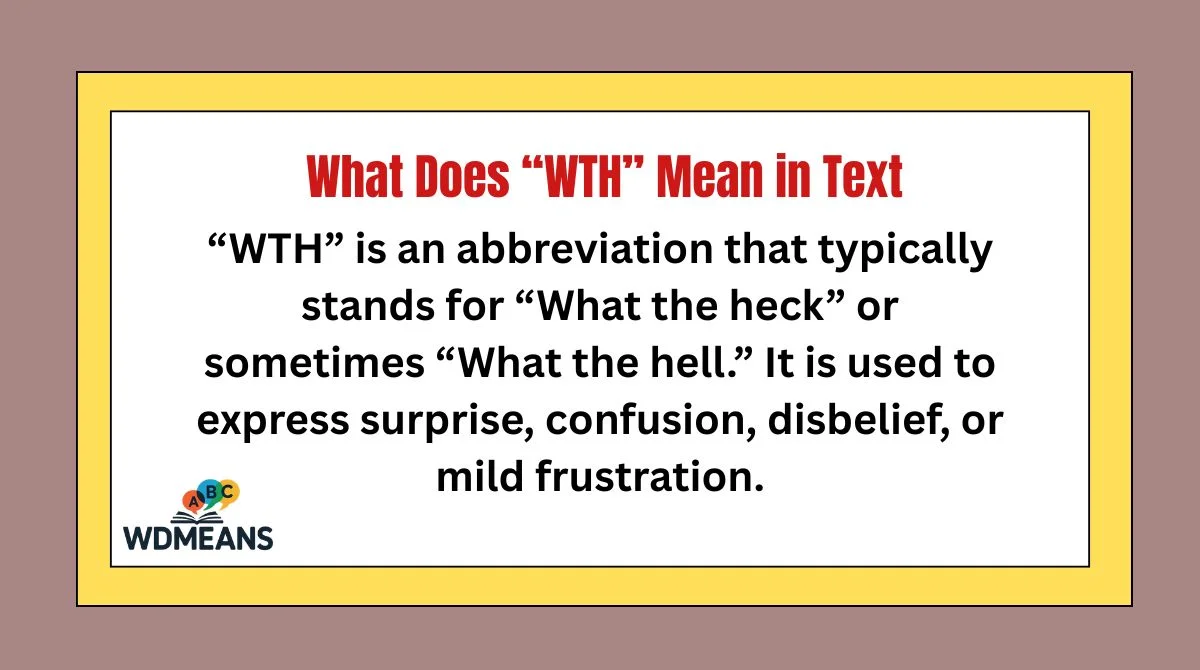
“WTH” is an abbreviation that typically stands for “What the heck” or sometimes “What the hell.” It is used to express surprise, confusion, disbelief, or mild frustration. The exact tone depends on the situation and the relationship between the people communicating.
When someone types “WTH,” they are usually reacting to something unexpected or difficult to understand. For example, if a friend sends a surprising message, you might reply with “WTH?” to show you’re shocked or puzzled.
The phrase is often considered a softer or more polite alternative to stronger expressions. While “What the hell” can sound more intense or even rude, “What the heck” is generally seen as less offensive. Because of this flexibility, “WTH” is widely accepted in informal communication.
In essence, it serves as a quick emotional reaction—similar to saying “What just happened?” or “Why is this happening?”—but in a shorter, more casual form.
Background
The use of abbreviations like “WTH” grew alongside the rise of digital communication, particularly texting, chat rooms, and early internet forums. When character limits and typing speed mattered, people began shortening phrases to communicate more efficiently.
“WTH” likely emerged as a cleaner alternative to more explicit expressions. As online communities expanded, users needed ways to express strong emotions without being overly offensive or violating platform guidelines. This led to the popularity of softened abbreviations.
Over time, the term became part of everyday internet slang and spread across platforms like messaging apps, social networks, and online gaming. Today, it is widely understood across different age groups, although it is more commonly used by younger audiences who are familiar with digital shorthand.
Its longevity comes from its versatility—it can be humorous, sarcastic, or genuinely confused depending on how it is used.
Usage in Different Contexts (Chat, Social Media, Professional Fields)
“WTH” is primarily used in informal settings, but its meaning can shift slightly depending on the environment.
In casual chats, it often expresses surprise or disbelief. For instance, if someone shares unexpected news, “WTH” might be used as a quick reaction.
On social media, it is frequently seen in comments or captions reacting to unusual or shocking content. It can also be used humorously, especially when paired with memes or viral videos.
In professional fields, however, its usage is limited. While it might appear in internal team chats among colleagues who share a casual rapport, it is generally not appropriate in formal emails, reports, or official communication. Using it in a professional setting can come across as unpolished or overly informal.
Overall, understanding the context is key. While it works well in relaxed environments, it should be avoided in situations requiring professionalism and clarity.
Meaning in Chat, WhatsApp, Instagram, TikTok
Across popular platforms, “WTH” maintains its core meaning but adapts to the style of communication on each platform.
- In chat apps and WhatsApp, it is often used in real-time conversations to react quickly. For example: “WTH was that?”
- On Instagram, it may appear in comments reacting to photos, reels, or stories, often expressing surprise or humor.
- On TikTok, it is commonly used in captions or comments to react to unexpected or funny videos.
In all these platforms, tone plays a big role. Depending on emojis or punctuation used alongside it, “WTH” can feel playful, annoyed, or genuinely confused.
Meaning in Physics, Medical, and Aircraft Terminology
Interestingly, “WTH” is not commonly used as a formal abbreviation in technical fields like physics, medicine, or aviation. Unlike some acronyms that carry specialized meanings, “WTH” remains largely informal.
In physics, abbreviations usually relate to measurements, formulas, or scientific terms, and “WTH” does not have a recognized meaning in this context.
In medical terminology, abbreviations are strictly regulated to avoid confusion, and “WTH” is not used in professional documentation.
In aircraft or aviation terminology, standard abbreviations are also highly structured and internationally recognized, leaving no room for informal slang like “WTH.”
Therefore, if you encounter “WTH” in these fields, it is almost certainly being used informally rather than as a technical term.
Common Misconceptions
One common misconception is that “WTH” always carries a negative or offensive tone. In reality, it is often used playfully or humorously.
Another misunderstanding is that it always stands for a harsh phrase. While it can mean “What the hell,” many people interpret it as the milder “What the heck,” especially in polite conversations.
Some also assume it is universally appropriate, but this is not true. Its informal nature means it should be used carefully depending on the audience and setting.
Similar Terms & Alternatives
There are several alternatives to “WTH” that convey similar emotions:
- “OMG” (Oh my God) – expresses surprise or shock
- “LOL” (Laugh out loud) – indicates humor
- “WTF” (What the f*** ) – stronger and more explicit
- “Seriously?” – expresses disbelief in a more neutral tone
Each alternative varies in intensity and appropriateness, so choosing the right one depends on the situation.
How to Respond to It
Responding to “WTH” depends on the context in which it is used.
If it expresses confusion, you can clarify the situation. For example: “Let me explain what happened.”
If it reflects surprise, you might respond with more details or share your own reaction.
If it is used humorously, a lighthearted reply or emoji can keep the conversation engaging.
The key is to match the tone—whether serious, playful, or explanatory.
Differences from Similar Words
“WTH” differs from similar abbreviations mainly in tone and intensity.
Compared to “WTF,” it is less aggressive and more socially acceptable. While both express surprise or frustration, “WTH” is often preferred in mixed or polite company.
Compared to “OMG,” it leans more toward confusion or disbelief rather than excitement or amazement.
These subtle differences make “WTH” a versatile but relatively mild expression.
Relevance in Online Conversations & Dating Apps
In online conversations and dating apps, “WTH” plays a role in making interactions feel casual and spontaneous. It can help express genuine reactions quickly, making conversations feel more natural.
However, tone is especially important in these settings. Since text lacks facial expressions and voice cues, “WTH” can sometimes be misinterpreted as rude or overly blunt.
Using it sparingly and pairing it with emojis or context can help avoid misunderstandings. When used correctly, it adds personality and authenticity to digital communication.
Conclusion
“WTH” is a simple yet expressive abbreviation that has become a staple in modern digital communication. It allows people to convey surprise, confusion, or mild frustration quickly and efficiently.
While it is widely used across chats and social media platforms, its informal nature means it should be used thoughtfully, especially in professional settings.
Understanding its meaning, variations, and appropriate contexts helps avoid miscommunication and ensures smoother interactions online.
As language continues to evolve with technology, abbreviations like “WTH” remain essential tools for expressing emotions in a fast-paced digital world.

I am Alexander Hayes, creator of WDMEANS, dedicated to simplifying English learning through clear word meanings. I help learners improve vocabulary with easy, accurate, and practical explanations for everyday use online.