In today’s fast-paced digital world, short forms and slang dominate online communication.
One such commonly used term is “ima.” If you’ve seen it in messages, social media posts, or comments and wondered what it means, you’re not alone.
Many people search for this phrase because it appears frequently in casual conversations, especially among younger audiences and on platforms like texting apps and social media.
“Ima” is a simple yet expressive abbreviation that helps people communicate quickly and informally.
Understanding its meaning can make it easier to follow conversations, respond appropriately, and even sound more natural in digital communication.
This article breaks down everything you need to know about “ima,” including its definition, origins, different uses, and how it compares to similar expressions.
Meaning & Definition
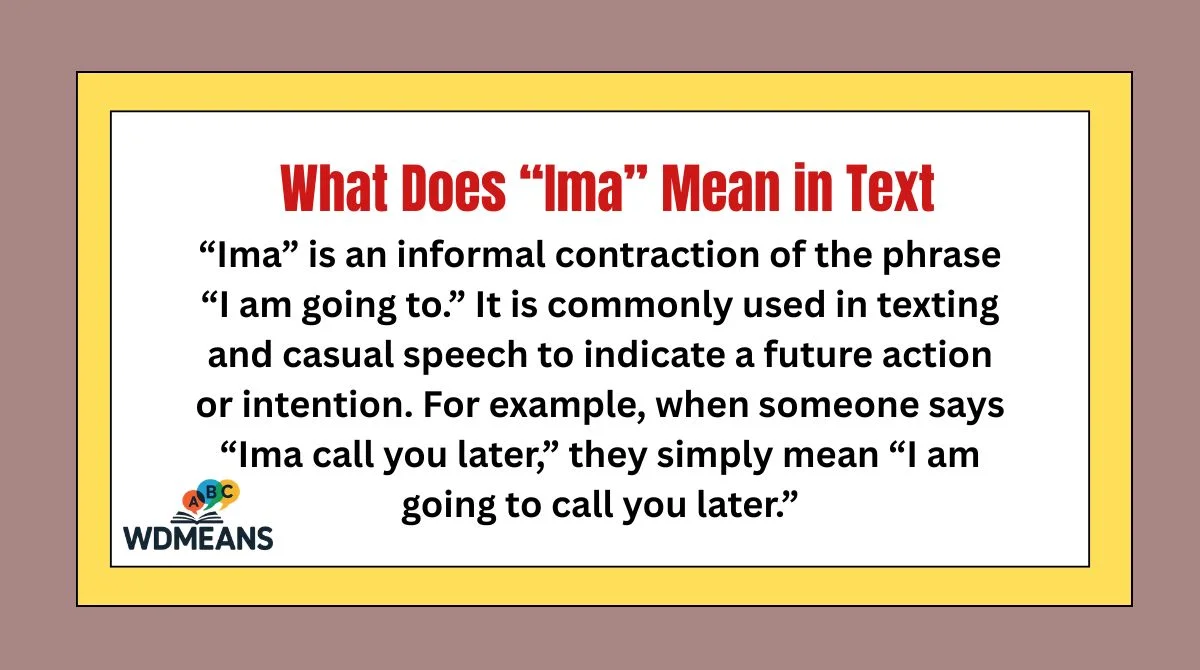
“Ima” is an informal contraction of the phrase “I am going to.” It is commonly used in texting and casual speech to indicate a future action or intention. For example, when someone says “Ima call you later,” they simply mean “I am going to call you later.”
This slang term reflects how spoken language often becomes shortened in writing, especially in digital communication where speed and simplicity are valued. Instead of typing the full phrase, people prefer the quicker “ima,” which still clearly conveys the intended meaning.
It’s important to note that “ima” is not considered standard English. It is widely accepted in informal contexts but should generally be avoided in formal writing, academic work, or professional communication.
Background
The origin of “ima” comes from spoken English, particularly from the way people naturally blend words together in casual conversation. When spoken quickly, “I am going to” often sounds like “I’mma” or “ima.” Over time, this pronunciation carried over into written digital communication.
The rise of texting, instant messaging, and social media platforms accelerated the popularity of such abbreviations. As character limits and typing convenience became important, users began adopting shorter forms like “ima,” “gonna,” and “wanna.”
Cultural influence also played a role. Informal speech patterns from music, movies, and online communities helped spread the usage globally. Today, “ima” is widely understood across different regions, even among people who are not native English speakers.
Usage in Different Contexts
“Ima” is mainly used in informal communication, but its meaning can slightly vary depending on the context.
Chat & Messaging
In everyday texting, “ima” is used to express immediate or planned actions:
- “Ima eat now.”
- “Ima finish this later.”
Social Media
On platforms like Twitter, Facebook, or comments sections, it adds a casual tone:
- “Ima just leave this here 😂”
- “Ima try this trend!”
Professional Fields
“Ima” is generally not appropriate in professional settings such as emails, reports, or workplace communication. Instead, the full phrase “I am going to” should be used for clarity and professionalism.
Meaning in Chat, WhatsApp, Instagram, TikTok
On messaging apps and social platforms, “ima” is extremely common and carries a relaxed, conversational tone.
- WhatsApp & Chat: Used in quick replies and casual planning.
- Instagram: Often appears in captions or comments, sometimes humorously.
- TikTok: Frequently used in videos or text overlays to indicate actions or reactions, such as “ima try this hack.”
In these environments, “ima” helps convey personality and relatability, making communication feel more natural and less formal.
Meaning in Physics, Medical, and Aircraft Terminology
Interestingly, “IMA” can have entirely different meanings outside casual texting:
- Physics: It may stand for Ideal Mechanical Advantage, a concept used to describe the efficiency of machines.
- Medical: It can refer to the Internal Mammary Artery, an important blood vessel in the chest.
- Aircraft/Aviation: “IMA” might be used as an abbreviation for specific systems or organizations, depending on the context.
These meanings are unrelated to the slang version and are typically written in uppercase (“IMA”) to distinguish them.
Common Misconceptions
A common misunderstanding is that “ima” is a formal abbreviation or universally accepted English word. In reality, it is strictly informal slang.
Another misconception is confusing “ima” with “I’m,” which means “I am.” While similar, “ima” specifically implies future intention, not just a present state.
Similar Terms & Alternatives
There are several similar expressions that convey the same idea:
- “Gonna” (going to)
- “I’m gonna”
- “About to”
- “Planning to”
Each of these alternatives can be used depending on the level of formality and context.
How to Respond to It
Responding to “ima” depends on the conversation:
- If someone says, “Ima call you,” you can reply: “Okay, I’ll be waiting.”
- If they say, “Ima go now,” you might respond: “Alright, talk later!”
The key is to match the casual tone and respond naturally.
Differences from Similar Words
“Ima” differs from similar phrases in subtle ways:
- “I’m” = present tense (I am)
- “Gonna” = future intention, but often used with “I’m”
- “Ima” = combines both subject and intention in one informal word
This makes “ima” a compact and efficient expression in casual speech.
Relevance in Online Conversations & Dating Apps
In online chats and dating apps, tone matters a lot. Using “ima” can make messages feel more relaxed and friendly. It helps avoid sounding too formal or robotic.
For example:
- “Ima grab coffee, wanna join?” sounds more casual than “I am going to grab coffee.”
However, overusing slang or using it in the wrong context can sometimes appear unprofessional or immature, so balance is important.
Conclusion
“Ima” is a simple yet widely used slang term that represents “I am going to.” Its popularity comes from the need for quick, informal communication in texting and social media.
While it is perfect for casual conversations, it should be avoided in formal settings.
Understanding its meaning, context, and variations helps you communicate more effectively and confidently in digital spaces.
As language continues to evolve, expressions like “ima” highlight how communication adapts to modern lifestyles.

I am Alexander Hayes, creator of WDMEANS, dedicated to simplifying English learning through clear word meanings. I help learners improve vocabulary with easy, accurate, and practical explanations for everyday use online.