In today’s fast-paced digital world, language has evolved into a more casual, expressive, and sometimes confusing form.
One such example is the term “wut,” which frequently appears in text messages, social media comments, and online conversations.
Many people search for its meaning because it doesn’t follow traditional spelling rules, yet it’s widely used in informal communication.
Understanding what “wut” means is important for staying connected in modern conversations, especially among younger audiences and online communities.
It reflects tone, emotion, and reaction rather than just literal meaning.
Whether you’ve seen it in a chat, on platforms like Instagram or TikTok, or even in memes, knowing how to interpret and respond to it can help you communicate more effectively.
This article explores its meaning, origins, usage across contexts, and how it differs from similar expressions.
Meaning & Definition
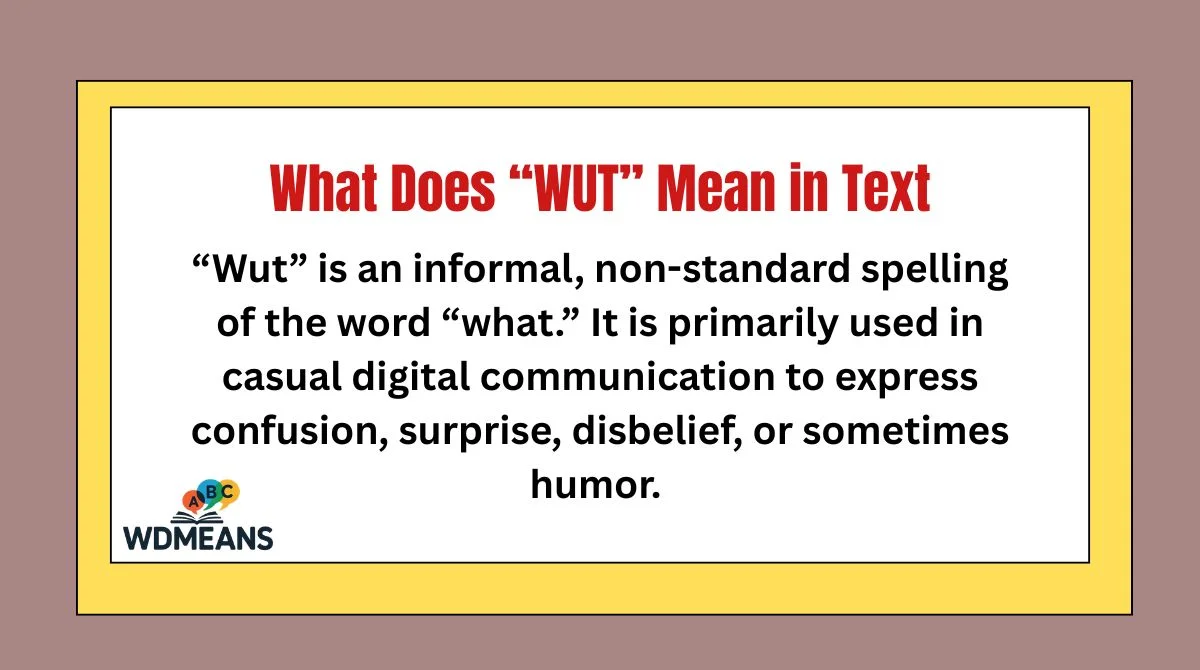
“Wut” is an informal, non-standard spelling of the word “what.” It is primarily used in casual digital communication to express confusion, surprise, disbelief, or sometimes humor. Unlike the formal “what,” which is neutral in tone, “wut” often carries emotional emphasis depending on context.
For example, if someone texts “wut??” they are likely reacting to something unexpected or hard to believe. It can also indicate that the sender didn’t understand something clearly. The tone can range from playful curiosity to genuine confusion or even mild shock.
The spelling itself is intentionally simplified and phonetic, reflecting how the word might sound when spoken quickly or casually. This makes it more expressive and aligned with internet culture, where creativity and brevity are valued.
In essence, “wut” is less about grammatical correctness and more about conveying feeling and reaction in a quick, relatable way.
Background
The term “wut” emerged alongside the rise of internet slang and texting culture in the early 2000s. As communication shifted from formal writing to quick digital exchanges, users began modifying words to save time and add personality.
Online forums, gaming communities, and early messaging platforms played a significant role in popularizing such spellings. Over time, “wut” became a recognizable expression, especially in meme culture, where exaggerated reactions are common.
Its popularity also grew due to its visual and emotional impact. Compared to “what,” the spelling “wut” feels more expressive and often humorous. This made it particularly appealing in environments where tone is difficult to convey through text alone.
Today, it remains a staple of informal communication, especially among younger users and in online spaces where creativity and individuality are encouraged.
Usage in Different Contexts (Chat, Social Media, Professional Fields)
In casual chats, “wut” is commonly used to react quickly to unexpected or confusing messages. It’s often paired with punctuation like “??” or emojis to amplify the emotion.
On social media platforms, it appears in comments, captions, and memes. Users employ it to express disbelief or humor in response to posts. Its informal nature makes it ideal for engaging, lighthearted interactions.
In professional fields, however, “wut” is rarely appropriate. Formal communication typically requires standard spelling and clarity. Using “wut” in emails, reports, or workplace chats may come across as unprofessional or careless.
That said, in relaxed team environments or creative industries, it might occasionally appear in informal internal chats, but even then, its use is limited.
Overall, the context determines whether “wut” enhances communication or undermines it.
Meaning in Chat, WhatsApp, Instagram, TikTok
Across messaging apps and social platforms, “wut” serves as a quick reaction tool.
- Chat & WhatsApp: Often used to ask for clarification or express confusion. Example: “Wut are you talking about?”
- Instagram: Appears in comments reacting to surprising or unusual posts.
- TikTok: Frequently used in captions or comments to express disbelief at unexpected or humorous videos.
On these platforms, tone is everything. “Wut” can be playful, sarcastic, or genuinely confused depending on context, punctuation, and accompanying emojis.
It’s also commonly used in memes, where exaggerated reactions are part of the humor.
Meaning in Physics, Medical, and Aircraft Terminology
Interestingly, “WUT” can also appear as an abbreviation in specialized fields, though this usage is unrelated to the slang term.
- Physics: It is not a standard or widely recognized term.
- Medical: Occasionally used as an abbreviation in specific institutional contexts, but not universally defined.
- Aircraft/Aviation: May appear as an airport code or internal abbreviation, depending on the system being used.
These meanings are context-specific and typically written in uppercase (“WUT”), distinguishing them from the informal lowercase “wut” used in texting.
Common Misconceptions
One common misconception is that “wut” is simply a misspelling due to poor grammar. In reality, it is a deliberate stylistic choice used to convey tone and emotion.
Another misunderstanding is assuming it always expresses confusion. While that is its primary use, it can also signal humor, sarcasm, or disbelief.
Some people also believe it is inappropriate in all contexts. While it’s unsuitable for formal writing, it is perfectly acceptable—and often expected—in casual online communication.
Similar Terms & Alternatives
Several other expressions serve similar purposes:
- “What” – Standard and neutral
- “Huh” – Indicates confusion
- “Eh?” – Casual questioning tone
- “Wait, what?” – Emphasizes surprise
- “LOL what” – Combines humor and confusion
Each alternative carries a slightly different tone, allowing users to choose the most appropriate expression for the situation.
How to Respond to It
Responding to “wut” depends on the context. If someone uses it because they are confused, provide clarification.
For example:
- “Wut do you mean?” → Respond with a clearer explanation
- “Wut??” → Offer more details or repeat the information
If it’s used humorously or sarcastically, you can respond in a similarly light tone. Matching the energy of the conversation helps maintain flow and engagement.
In general, treat it as a prompt for explanation or reaction rather than a formal question.
Differences from Similar Words
The main difference between “wut” and “what” lies in tone and formality.
- “What” is grammatically correct and neutral
- “Wut” is informal, expressive, and emotional
Compared to “huh,” which suggests confusion, “wut” can also convey surprise or disbelief.
It is this flexibility in tone that makes “wut” unique among similar expressions.
Relevance in Online Conversations & Dating Apps
In online conversations, especially on dating apps, “wut” can play a subtle role in shaping tone. It can make messages feel more relaxed, playful, and less formal.
For example, using “wut” instead of “what” can signal a casual and approachable personality. However, overuse may come across as immature or unclear.
In dating contexts, balance is key. A single “wut?” can feel fun and engaging, but clarity and good communication remain essential for meaningful interaction.
Conclusion
“Wut” is a simple yet expressive term that reflects the evolution of digital communication.
While it originates from the word “what,” its informal spelling adds emotion, personality, and tone to conversations.
From casual chats to social media interactions, it helps users react quickly and creatively.
Understanding its m
eaning and appropriate usage ensures better communication and avoids misunderstandings.
While it has no place in formal writing, it thrives in informal settings where creativity and spontaneity are valued.
By recognizing its nuances, you can use it effectively and respond appropriately in various contexts.

I am Alexander Hayes, creator of WDMEANS, dedicated to simplifying English learning through clear word meanings. I help learners improve vocabulary with easy, accurate, and practical explanations for everyday use online.