In today’s fast-paced digital world, abbreviations and acronyms have become a natural part of everyday communication.
One such commonly used term is “TTYL.” If you’ve ever received this in a message and wondered what it means, you’re not alone.
People frequently search for it to better understand online conversations, texting etiquette, and social media slang.
“TTYL” is widely used across messaging platforms, from casual chats to social media apps, making it an essential piece of modern communication vocabulary.
Understanding its meaning helps avoid confusion and ensures smooth interactions, especially when chatting with friends, colleagues, or even new acquaintances online.
This article will break down everything you need to know—from its definition and origins to how it’s used in different contexts, including some surprising meanings in technical fields.
By the end, you’ll not only understand what “TTYL” means but also how to use and respond to it confidently.
Meaning & Definition
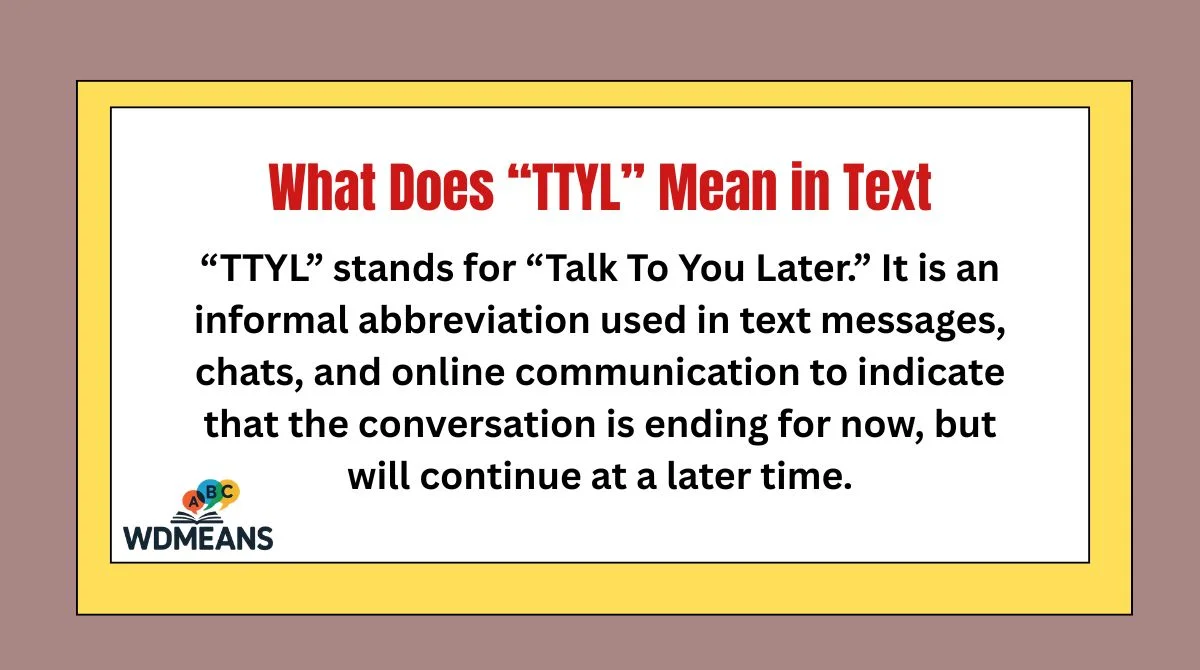
“TTYL” stands for “Talk To You Later.” It is an informal abbreviation used in text messages, chats, and online communication to indicate that the conversation is ending for now, but will continue at a later time.
It conveys a friendly and casual tone, suggesting that the sender intends to reconnect in the future. Unlike abrupt endings, “TTYL” softens the conclusion of a conversation, making it feel more polite and personable.
For example:
- “I’ve got to go now, ttyl!”
- “Busy at the moment, ttyl!”
In both cases, the phrase signals a temporary goodbye rather than a permanent one. It’s similar to saying “see you later” in spoken conversation.
The abbreviation is typically written in lowercase (“ttyl”), though uppercase (“TTYL”) is also acceptable. Tone is generally determined by context rather than capitalization.
Overall, “TTYL” is a quick, efficient, and friendly way to wrap up a conversation without sounding dismissive or overly formal.
Background
The origin of “TTYL” dates back to the early days of internet communication, particularly in chatrooms and instant messaging platforms of the 1990s and early 2000s. During that time, users relied heavily on abbreviations to save time and effort while typing.
Platforms like AOL Instant Messenger (AIM), MSN Messenger, and early SMS texting popularized shorthand expressions such as “BRB” (Be Right Back), “LOL” (Laugh Out Loud), and “TTYL.” These abbreviations became part of digital culture and spread rapidly among younger users.
As mobile phones became more widespread, texting limits (like character restrictions) further encouraged the use of short forms. “TTYL” fit perfectly into this environment because it was concise yet meaningful.
Over time, the term evolved from niche internet slang to a widely recognized expression used across generations. Today, it appears in messaging apps, emails, and even casual workplace communication.
Its longevity highlights how certain digital expressions remain relevant despite technological changes. While many slang terms fade, “TTYL” continues to thrive because of its simplicity and usefulness.
Usage in Different Contexts (Chat, Social Media, Professional Fields)
“TTYL” is versatile and appears in a variety of communication settings, though its tone remains informal.
Casual Chat
In everyday texting with friends or family, “TTYL” is extremely common. It helps end conversations politely without sounding abrupt.
Social Media
On platforms like Facebook or messaging apps, users include “TTYL” in comments or private messages when stepping away. It maintains a friendly tone and keeps the interaction open-ended.
Professional Settings
While less common, “TTYL” may appear in informal workplace chats, especially in internal messaging platforms like Slack or Teams. However, it’s generally avoided in formal emails or professional documents.
For example:
- Acceptable: “I’ll review this later, ttyl.” (casual team chat)
- Not ideal: “TTYL” in a formal business email
Understanding context is key. Using “TTYL” appropriately ensures you come across as both friendly and respectful.
Meaning in Chat, WhatsApp, Instagram, TikTok
Across modern apps, “TTYL” retains its core meaning but adapts slightly to platform culture.
Chat & WhatsApp
On messaging apps like WhatsApp, it’s used frequently to signal a pause in conversation. It’s quick and widely understood.
On Instagram DMs, “TTYL” may be used casually, often paired with emojis to soften the tone.
TikTok
While less common in comments, it may appear in private messages or captions, often in a playful or humorous way.
Despite platform differences, the meaning remains consistent: a temporary goodbye with the intention to reconnect later.
Meaning in Physics, Medical, and Aircraft Terminology
Interestingly, “TTYL” is not commonly used as a technical acronym in fields like physics, medicine, or aviation. However, confusion can arise because many industries rely on abbreviations.
- Physics: No standard scientific meaning for “TTYL.”
- Medical Field: Not a recognized clinical abbreviation.
- Aircraft/Aviation: Not used in official aviation communication.
If “TTYL” appears in these contexts, it is almost certainly being used in its informal, conversational sense rather than as a technical term.
Common Misconceptions
There are a few misunderstandings about “TTYL” that can lead to confusion:
- It means goodbye forever: Not true. It implies a temporary break, not a permanent ending.
- It’s rude: In most cases, it’s polite and friendly when used correctly.
- It’s outdated: While older, it’s still widely used and understood today.
Recognizing these misconceptions helps ensure proper interpretation.
Similar Terms & Alternatives
Several other abbreviations carry similar meanings:
- BRB (Be Right Back) – Indicates a very short break
- GTG (Got To Go) – Signals urgency
- CU (See You) – Casual goodbye
- TTFN (Ta-Ta For Now) – Playful farewell
Each has a slightly different tone, but all serve a similar purpose.
How to Respond to It
Responding to “TTYL” is simple and depends on the tone of the conversation:
- “Okay, talk later!”
- “Sure, ttyl!”
- “Bye, take care!”
There’s no strict rule—just match the level of formality and friendliness.
Differences from Similar Words
“TTYL” differs from similar phrases in subtle ways:
- TTYL vs BRB: BRB suggests a short pause; TTYL suggests a longer break.
- TTYL vs Goodbye: Goodbye can feel final; TTYL is temporary.
- TTYL vs GTG: GTG is more urgent; TTYL is relaxed.
These distinctions help choose the right phrase for the situation.
Relevance in Online Conversations & Dating Apps
In online conversations, especially dating apps, tone matters greatly. “TTYL” helps maintain a friendly and open-ended connection without seeming disinterested.
For example, ending a chat with “TTYL” signals that you enjoyed the conversation and intend to continue it later. This can leave a positive impression and encourage future interaction.
However, overusing it or using it too early in conversations may seem dismissive. Balance is key—use it naturally when you genuinely need to step away.
Conclusion
“TTYL” is a simple yet powerful abbreviation that has stood the test of time in digital communication.
Meaning “Talk To You Later,” it offers a friendly, informal way to pause conversations without closing the door entirely.
From its origins in early internet chatrooms to its continued use across modern apps, it remains a valuable part of everyday texting language.
Understanding its meaning, context, and proper usage ensures smoother interactions and prevents miscommunication.
Whether you’re chatting with friends, messaging on social media, or navigating online dating, “TTYL” helps keep conversations polite and open-ended.
As digital communication continues to evolve, expressions like “TTYL” remind us that even short messages can carry warmth and intention.

I am Alexander Hayes, creator of WDMEANS, dedicated to simplifying English learning through clear word meanings. I help learners improve vocabulary with easy, accurate, and practical explanations for everyday use online.