In today’s fast-paced digital world, abbreviations and slang dominate online conversations. One such term that frequently appears across social media and messaging platforms is “OOTD.”
Many people encounter it in captions, chats, or hashtags and wonder what it actually means. Understanding these modern expressions helps you stay connected, relevant, and confident in online communication.
“OOTD” is especially popular among younger audiences, influencers, and fashion enthusiasts, but its usage has expanded beyond just style-related discussions.
Whether you’re scrolling through Instagram, chatting on WhatsApp, or browsing TikTok, you’re likely to see it used in different ways.
This article breaks down everything you need to know about the term—its meaning, origin, uses in various contexts, and how to respond to it naturally.
By the end, you’ll not only understand the term but also feel comfortable using it yourself in everyday digital conversations.
Meaning & Definition
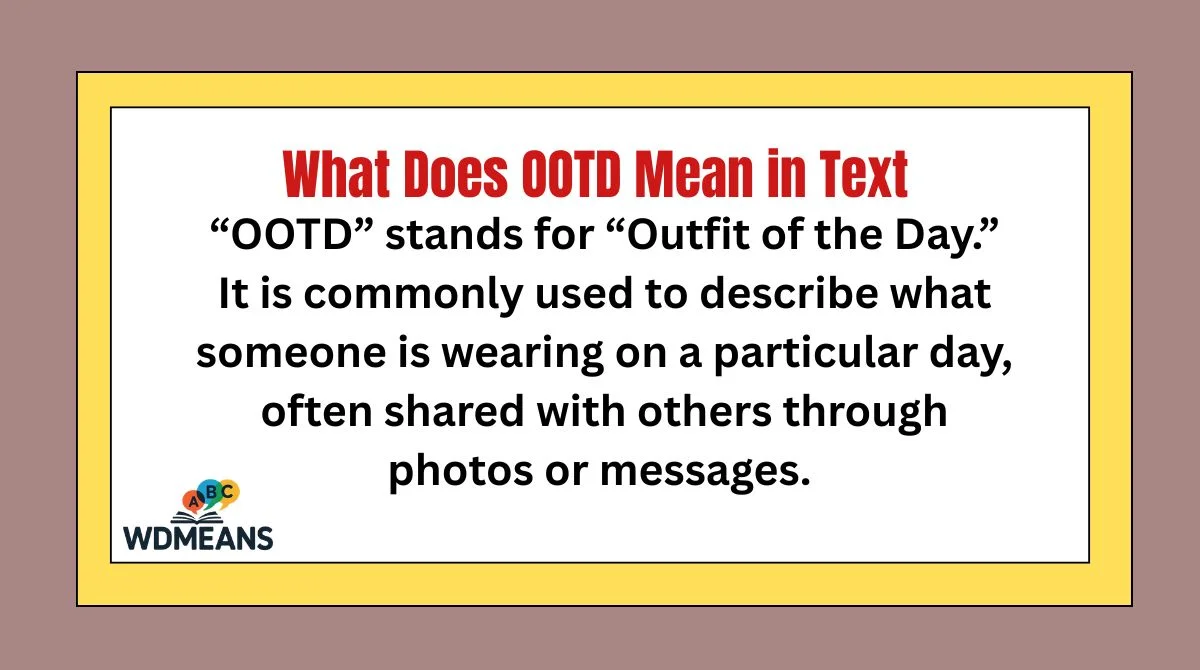
“OOTD” stands for “Outfit of the Day.” It is commonly used to describe what someone is wearing on a particular day, often shared with others through photos or messages. The term is typically used as a caption, hashtag, or quick comment when showcasing clothing or style choices.
At its core, “OOTD” is a simple and expressive abbreviation. Instead of writing a full sentence like “This is what I’m wearing today,” users can just type “OOTD” to convey the same idea. It’s concise, trendy, and widely understood across online platforms.
The meaning remains consistent regardless of where it appears: it always refers to a person’s outfit for the day. However, the tone can vary. Sometimes it’s used casually among friends, while other times it can be part of a more curated or aesthetic presentation, especially on social media.
It’s important to note that “OOTD” is not limited to fashion influencers. Anyone can use it, whether they’re sharing a casual look, a formal outfit, or even a humorous take on their daily attire.
Background
The term “OOTD” originated from the rise of fashion blogging and social media platforms in the early 2010s. As people began sharing their daily outfits online, they needed a quick and catchy way to label their posts. “Outfit of the Day” was shortened to “OOTD” for convenience and style.
Platforms like Instagram played a major role in popularizing the term. Users started adding hashtags like #OOTD to make their posts discoverable, allowing others to browse outfit ideas and trends. Over time, it became a staple in the online fashion community.
As digital culture evolved, the term spread beyond fashion bloggers to everyday users. It became a part of internet slang, used casually in chats and posts. Today, it’s recognized globally and used by people of all ages, though it remains especially popular among younger audiences.
The growth of visual content—photos, reels, and short videos—also contributed to its popularity. Sharing outfits visually made “OOTD” even more relevant and widely used.
Usage in Different Contexts (Chat, Social Media, Professional Fields)
“OOTD” is highly versatile and appears in multiple contexts:
In chats:
People use it informally when talking to friends. For example, someone might text, “Here’s my OOTD,” followed by a photo. It adds a fun and expressive touch to everyday conversations.
On social media:
This is where “OOTD” shines the most. It’s commonly used in captions, hashtags, and comments. Influencers, bloggers, and everyday users post their outfits with “OOTD” to share style inspiration or document their daily looks.
In professional fields:
While not typically used in formal communication, it may appear in industries related to fashion, marketing, or content creation. For example, fashion brands might use it in campaigns or social media strategies to engage audiences.
Overall, the tone of usage depends on the context. It remains casual in most situations but can be strategically used in professional digital marketing environments.
Meaning in Chat, WhatsApp, Instagram, TikTok
Across platforms, “OOTD” maintains the same core meaning but varies slightly in style and presentation:
In chat and WhatsApp:
It’s used casually between friends. Someone might send a quick selfie with “OOTD” to show what they’re wearing.
On Instagram:
It’s often used as a caption or hashtag. Posts labeled “OOTD” are usually more styled and intentional, showcasing fashion choices in a visually appealing way.
On TikTok:
Creators use “OOTD” in videos to present their outfits, often with transitions, music, or storytelling. It adds an entertaining element to the concept.
In all these platforms, the term serves as a quick label for sharing personal style, making it universally understood in digital communication.
Meaning in Physics, Medical, and Aircraft Terminology
Interestingly, “OOTD” is not commonly used in technical fields like physics, medicine, or aviation. Unlike some abbreviations that carry multiple meanings across disciplines, “OOTD” is almost exclusively associated with fashion and social media culture.
In rare cases, similar-looking abbreviations might appear in technical contexts, but they usually have different meanings and are not interchangeable with “OOTD.” Therefore, if you see “OOTD” in a message, it’s safe to assume it refers to “Outfit of the Day,” not a scientific or professional term.
Common Misconceptions
One common misconception is that “OOTD” is only for influencers or fashion experts. In reality, anyone can use it, regardless of their style or audience.
Another misunderstanding is that it always implies a fashionable or trendy outfit. While it often highlights style, it can also be used humorously or casually, even for simple or everyday clothing.
Some people also confuse it with other abbreviations, assuming it has multiple meanings. However, “OOTD” is quite straightforward and rarely changes its definition.
Similar Terms & Alternatives
There are several similar expressions that convey related ideas:
- WIWT (What I Wore Today): A slightly more descriptive alternative
- Fit Check: Popular on TikTok, used to show outfits
- Look of the Day: A more formal variation
- Style Post: A broader term for sharing fashion content
These alternatives may vary in tone and usage but generally serve the same purpose as “OOTD.”
How to Respond to It
Responding to “OOTD” is simple and depends on the context:
- Compliment the outfit: “Looks great!”
- Ask questions: “Where did you get that jacket?”
- Engage casually: “Nice OOTD!”
If someone sends you an “OOTD,” they’re usually inviting feedback or sharing something personal, so a positive or engaging response is always appreciated.
Differences from Similar Words
While “OOTD” focuses specifically on daily outfits, terms like “fit check” emphasize showcasing style in a more interactive or trendy way. “WIWT” is more descriptive, while “OOTD” is shorter and more widely recognized.
The key difference lies in tone:
- “OOTD” is simple and universal
- “Fit check” is trendier and more dynamic
- “WIWT” is slightly more detailed
Relevance in Online Conversations & Dating Apps
In online conversations, especially on social media and dating apps, “OOTD” can play a role in self-expression. People use it to showcase personality, style, and confidence.
On dating platforms, sharing an “OOTD” can help break the ice or start conversations. It provides a glimpse into someone’s lifestyle and fashion sense, making interactions more engaging and personal.
Its relevance continues to grow as visual communication becomes more dominant in digital spaces.
Conclusion
“OOTD” is a simple yet powerful abbreviation that has become a staple of modern online communication.
From its origins in fashion blogging to its widespread use across social media and messaging apps, it represents more than just clothing—it’s a form of self-expression.
Understanding this term helps you navigate digital conversations more effectively and engage with others in a relatable way.
Whether you’re sharing your own style or responding to someone else’s post, “OOTD” offers a quick and creative way to connect.
As online language continues to evolve, terms like “OOTD” highlight how communication adapts to be faster, more visual, and more expressive.

I am Alexander Hayes, creator of WDMEANS, dedicated to simplifying English learning through clear word meanings. I help learners improve vocabulary with easy, accurate, and practical explanations for everyday use online.