In today’s fast-paced digital world, short forms and abbreviations have become a core part of communication.
One such commonly used abbreviation is “TY.” Many people encounter it in text messages, social media, or chats and wonder what it actually means.
Understanding these shorthand expressions is essential for effective online communication, especially as messaging culture continues to evolve.
People often search for the meaning of “TY” because it appears in casual conversations, comments, and even professional exchanges.
Its simplicity can sometimes lead to confusion, especially for those unfamiliar with internet slang. This article explores the meaning, origin, and various uses of “TY,” along with how to respond to it and how it differs from similar terms.
Whether you’re new to texting slang or just looking to deepen your understanding, this guide provides everything you need in a clear and engaging way.
Meaning & Definition
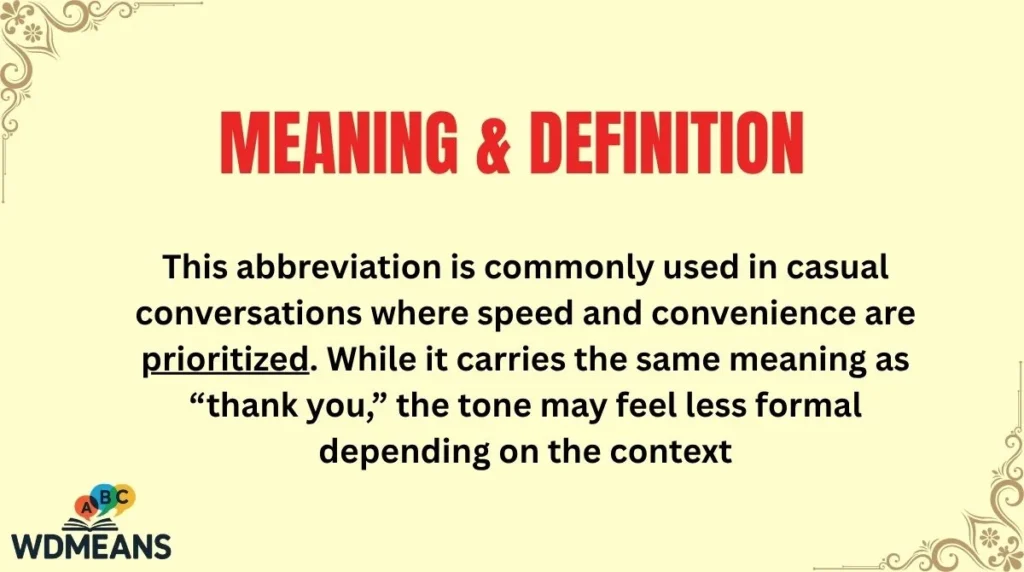
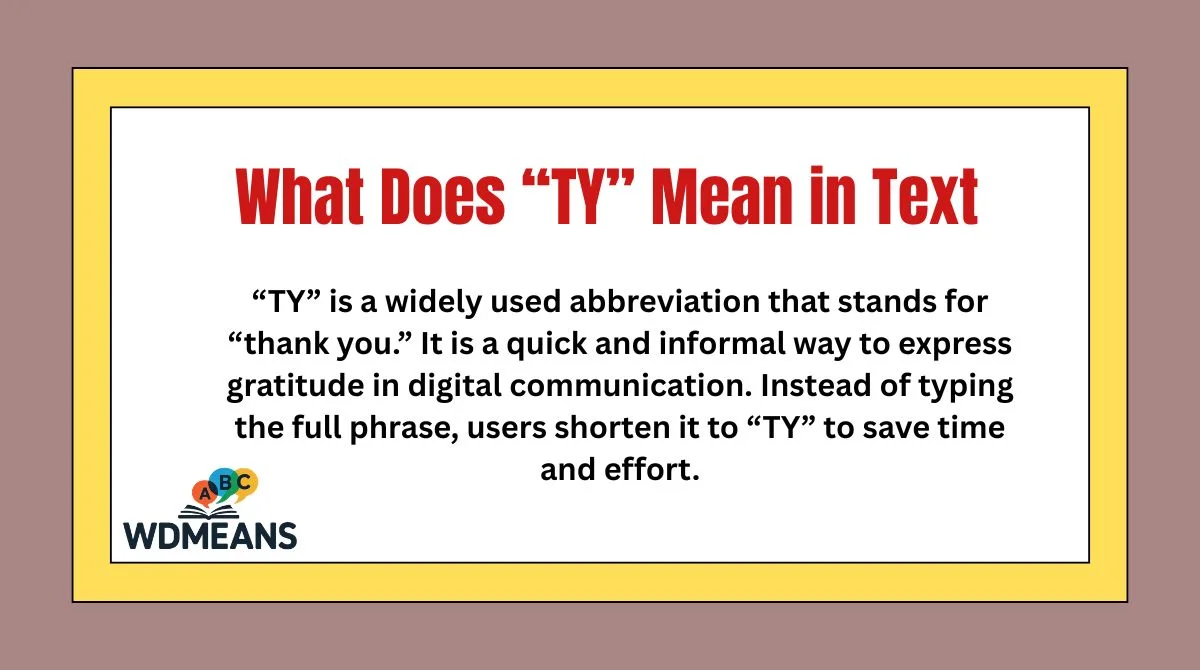
“TY” is a widely used abbreviation that stands for “thank you.” It is a quick and informal way to express gratitude in digital communication. Instead of typing the full phrase, users shorten it to “TY” to save time and effort.
This abbreviation is commonly used in casual conversations where speed and convenience are prioritized. While it carries the same meaning as “thank you,” the tone may feel less formal depending on the context. It’s typically friendly, polite, and appreciative, making it suitable for most everyday interactions.
However, because it is abbreviated, it may sometimes come across as less sincere in more formal or emotional situations. For example, in a heartfelt conversation, writing “thank you” in full might feel more genuine than simply saying “TY.”
Background
The use of abbreviations like “TY” originated from early internet culture, including chat rooms, SMS texting, and online gaming. When character limits were strict—such as in early mobile messaging—people developed shorter ways to communicate common phrases.
Over time, these abbreviations became part of everyday digital language. “TY” gained popularity alongside other short forms like “LOL” (laugh out loud) and “BRB” (be right back). As communication shifted to platforms like messaging apps and social media, the use of such shorthand continued to grow.
Today, “TY” is recognized globally and used across different age groups, although it is more common among younger users and those familiar with internet slang.
Usage in Different Contexts
“TY” can be used in various communication settings, but its tone and appropriateness may vary:
- Casual Conversations: Commonly used between friends and family to express quick appreciation.
- Online Gaming: Players often use “TY” to thank teammates quickly during gameplay.
- Work Chats: It may appear in informal workplace chats, but in formal emails, the full phrase “thank you” is preferred.
- Customer Interaction: Sometimes used in quick replies, though businesses often opt for more formal language.
The key is understanding the tone of the conversation before using it.
Meaning in Chat, WhatsApp, Instagram, TikTok
Across messaging platforms and social media, “TY” consistently means “thank you,” but the tone may vary slightly:
- Chat & WhatsApp: Used for quick, friendly replies.
- Instagram Comments: Often used to respond to compliments or supportive comments.
- TikTok: Seen in replies to fans or viewers, especially when acknowledging praise or engagement.
In these environments, brevity is valued, making “TY” a natural choice.
Meaning in Physics, Medical, and Aircraft Terminology
While “TY” is primarily known as slang, it can have different meanings in specialized fields:
- Physics: Rarely used as a standard abbreviation; context-specific usage may exist but is uncommon.
- Medical Field: “TY” might occasionally appear as shorthand in internal notes, but it is not a widely recognized medical abbreviation.
- Aircraft/Aviation: Could be used as a code or abbreviation in specific documentation, but it is not a standard aviation term.
In technical fields, abbreviations are usually more precise, so “TY” is less common compared to its use in everyday communication.
Common Misconceptions
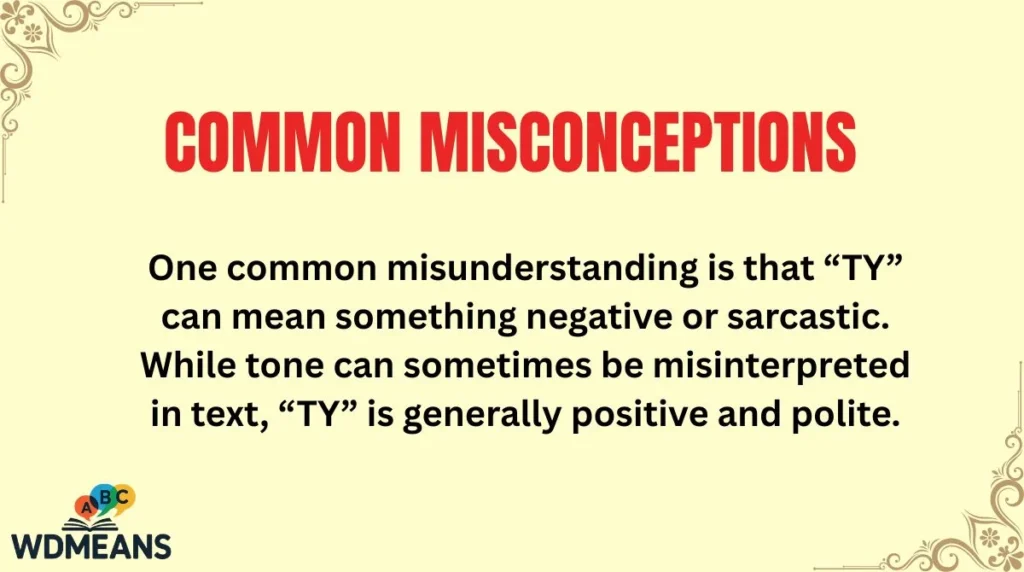
One common misunderstanding is that “TY” can mean something negative or sarcastic. While tone can sometimes be misinterpreted in text, “TY” is generally positive and polite.
Another misconception is that it is unprofessional in all settings. While it may not suit formal emails, it can still be acceptable in relaxed workplace chats.
Some also confuse it with similar abbreviations like “TYSM” (thank you so much), assuming they are interchangeable. While related, they convey slightly different levels of gratitude.
Similar Terms & Alternatives
There are several variations and alternatives to “TY,” including:
- “Thanks” – Slightly more expressive but still casual
- “Thx” – Another short form of “thanks”
- “TYSM” – Shows stronger appreciation
- “Much appreciated” – More formal and polite
- “Thanks a lot” – Adds emphasis
Each alternative carries a slightly different tone, allowing users to match their response to the situation.
How to Respond to It
Responding to “TY” is simple and depends on the context:
- “You’re welcome” – The most common reply
- “No problem” – Casual and friendly
- “Anytime” – Suggests willingness to help again
- “My pleasure” – More polite and formal
In informal chats, even a simple emoji or acknowledgment can work as a response.
Differences from Similar Words
“TY” differs from similar expressions mainly in tone and formality:
- “Thank you” vs. “TY”: The full phrase is more formal and expressive.
- “Thanks” vs. “TY”: “Thanks” feels slightly warmer and more conversational.
- “TYSM” vs. “TY”: “TYSM” conveys stronger gratitude.
Choosing the right version depends on how much appreciation you want to express and the context of the conversation.
Relevance in Online Conversations & Dating Apps
In online conversations, especially on dating apps, “TY” plays a subtle role. It helps maintain politeness without overcomplicating communication. For example, it may be used to acknowledge compliments, responses, or gestures.
However, overusing abbreviations in early conversations may sometimes seem too casual or uninterested. In dating contexts, balancing shorthand with full expressions can help create a more genuine connection.
Overall, “TY” is useful for keeping conversations light and efficient, but tone awareness remains important.
Conclusion
“TY” is a simple yet powerful abbreviation that reflects the evolving nature of digital communication.
It allows users to express gratitude quickly and efficiently across various platforms, from casual chats to social media interactions.
While it is widely accepted in informal settings, understanding when to use it—and when to opt for more formal language—is key to effective communication.
By recognizing its meaning, context, and alternatives, you can use “TY” appropriately and respond to it with confidence.
As online communication continues to grow, such abbreviations will remain an essential part of how we connect and express ourselves.

I am Alexander Hayes, creator of WDMEANS, dedicated to simplifying English learning through clear word meanings. I help learners improve vocabulary with easy, accurate, and practical explanations for everyday use online.