In today’s fast-paced digital communication, abbreviations and slang dominate how people interact online.
One such widely used term is “STFU,” which often appears in text messages, social media comments, and online chats.
Many people search for its meaning because it can come across as confusing, rude, or even humorous depending on the context.
Understanding what STFU means and how it is used is essential for navigating modern conversations effectively.
This term is especially popular among younger audiences and frequent internet users.
However, its tone can vary significantly based on who is using it and how it is delivered. While some use it jokingly among friends, others may use it aggressively.
This guide explains the meaning, background, different contexts, and appropriate responses to help you interpret and use the term correctly without misunderstanding or offense.
Meaning & Definition
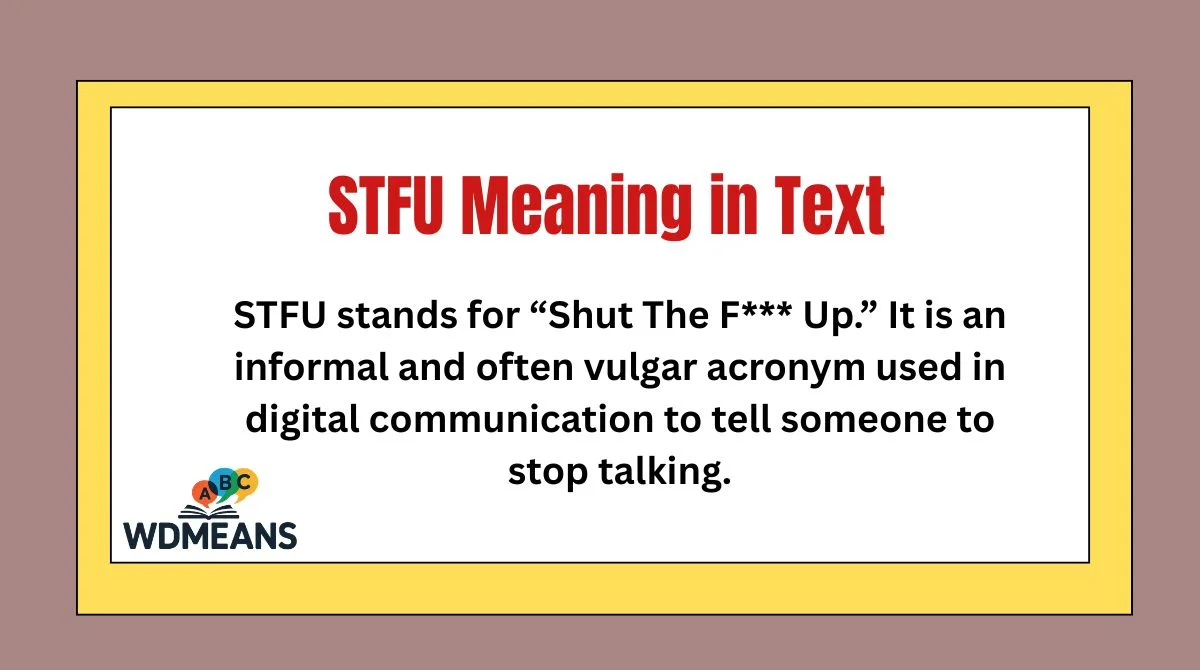
STFU stands for “Shut The F*** Up.” It is an informal and often vulgar acronym used in digital communication to tell someone to stop talking.
The phrase can be interpreted in multiple ways depending on tone, relationship, and situation.
At its core, STFU is a directive—meaning it tells someone to be quiet. However, unlike polite alternatives such as “please be quiet,” this acronym carries a strong emotional tone. It can express irritation, frustration, disbelief, or even playful teasing.
There are generally three main interpretations:
- Aggressive: Used to insult or silence someone in anger
- Playful: Used jokingly among friends (e.g., reacting to shocking news)
- Expressive: Used to show surprise or disbelief rather than literal silence
Because of its strong wording, it is considered inappropriate in formal communication or with people you do not know well.
Background
The term STFU originated from early internet culture, particularly in chatrooms, forums, and online gaming communities. As typing speed and convenience became important, users began shortening long phrases into acronyms. STFU quickly gained popularity due to its simplicity and strong emotional impact.
With the rise of texting and platforms like instant messaging apps, the acronym became even more widespread. It transitioned from niche online communities into mainstream usage, especially among teenagers and young adults.
Over time, its tone softened slightly in casual conversations. While originally harsh, it began to be used humorously in memes and friendly banter. Despite this evolution, the phrase still retains its potential to offend if used incorrectly.
Usage in Different Contexts (Chat, Social Media, Professional Fields)
In casual chat, STFU is often used among friends who understand each other’s tone. For example, someone might say it jokingly after hearing surprising news.
On social media, the meaning varies widely. In comment sections, it can appear aggressive or dismissive, especially during arguments. In memes or humorous posts, however, it may be used sarcastically.
In professional environments, STFU is considered highly inappropriate. Using it in workplace emails, meetings, or formal communication can damage relationships and appear unprofessional. Instead, polite alternatives should always be used.
Understanding the context is key. The same word can shift from harmless to offensive depending on the situation and relationship between people.
Meaning in Chat, WhatsApp, Instagram, TikTok
On platforms like WhatsApp, Instagram, and TikTok, STFU is commonly used in informal conversations. Its meaning depends heavily on tone and intent.
- WhatsApp: Often used among close friends jokingly
- Instagram: Seen in comments, sometimes sarcastic or rude
- TikTok: Frequently used in captions or reactions to express shock or excitement
For example:
- “STFU, that’s reckless!” → expressing surprise
- “Just STFU already” → showing annoyance
In these platforms, emojis, tone, and context help determine whether the phrase is playful or offensive.
Meaning in Physics, Medical, and Aircraft Terminology
Unlike many acronyms, STFU does not have a standard meaning in professional fields like physics, medicine, or aviation.
- In physics, it has no recognized technical definition
- In medical terminology, it is not used in any formal or clinical sense
- In aircraft or aviation, it is not a standard abbreviation
If STFU appears in these contexts, it is almost certainly informal or unrelated to professional terminology. People sometimes assume acronyms have multiple meanings across fields, but in this case, STFU remains primarily a slang term.
Common Misconceptions
One common misconception is that STFU always means anger or insult. While it can be harsh, it is not always used aggressively.
Another misunderstanding is that it is acceptable in all casual conversations. In reality, not everyone is comfortable with such language, even among friends.
Some also believe it has professional or technical meanings, which is incorrect. It is strictly informal slang.
Similar Terms & Alternatives
There are several alternatives to STFU depending on the tone you want:
- “Be quiet” – neutral and polite
- “Please stop talking” – formal and respectful
- “Hush” – softer tone
- “Zip it” – playful but less offensive
- “Quiet down” – commonly acceptable
Choosing the right alternative depends on the situation and your relationship with the other person.
How to Respond to It
If someone uses STFU toward you, your response should depend on context:
- If joking: Respond humorously or play along
- If rude: Stay calm and avoid escalating the situation
- If offensive: Set boundaries politely
- If unclear: Ask for clarification
For example:
- “Wow, okay 😄” (if playful)
- “That was unnecessary” (if rude)
Maintaining composure helps prevent misunderstandings.
Differences from Similar Words
STFU differs from other phrases like “shut up” or “be quiet” mainly in intensity and tone. It is more aggressive due to the inclusion of profanity.
- “Shut up” – direct but less vulgar
- “Be quiet” – polite
- “STFU” – strongest and most offensive form
Understanding these differences helps you choose appropriate language for different situations.
Relevance in Online Conversations & Dating Apps
In online conversations and dating apps, tone is everything. Using STFU can be risky, especially with someone you do not know well.
- In early conversations, it may come across as disrespectful
- Among established connections, it might be used jokingly
- Misuse can quickly end conversations or create negative impressions
Because text lacks vocal tone, phrases like STFU can easily be misinterpreted. It is generally safer to avoid it unless you are certain of the context.
Conclusion
STFU is a widely used internet acronym that carries strong emotional weight. While it simply means “Shut The F*** Up,” its interpretation depends heavily on context, tone, and relationship.
It can range from playful humor among friends to outright rudeness in arguments. Understanding when and how it is appropriate is essential for effective communication in the digital world.
Since it has no formal meaning in professional fields, it remains strictly informal slang.
Using it wisely—or choosing alternatives—can help you avoid misunderstandings and maintain respectful conversations online.

I am Alexander Hayes, creator of WDMEANS, dedicated to simplifying English learning through clear word meanings. I help learners improve vocabulary with easy, accurate, and practical explanations for everyday use online.