In today’s fast-paced digital world, abbreviations and slang dominate online communication.
One such commonly used term is “SMH.” If you’ve ever received a message containing it or seen it on social media, you may have wondered what it actually means.
People often search for this phrase because it can carry different tones depending on context—ranging from mild disappointment to disbelief or frustration.
Understanding modern texting language is essential for staying connected, especially as communication shifts more toward informal platforms like messaging apps and social media. “SMH” is a perfect example of how a simple abbreviation can convey emotion quickly without long explanations.
This article breaks down its meaning, origin, usage across platforms, and even its interpretation in specialized fields.
By the end, you’ll not only understand what it means but also how and when to use it appropriately.
Meaning & Definition
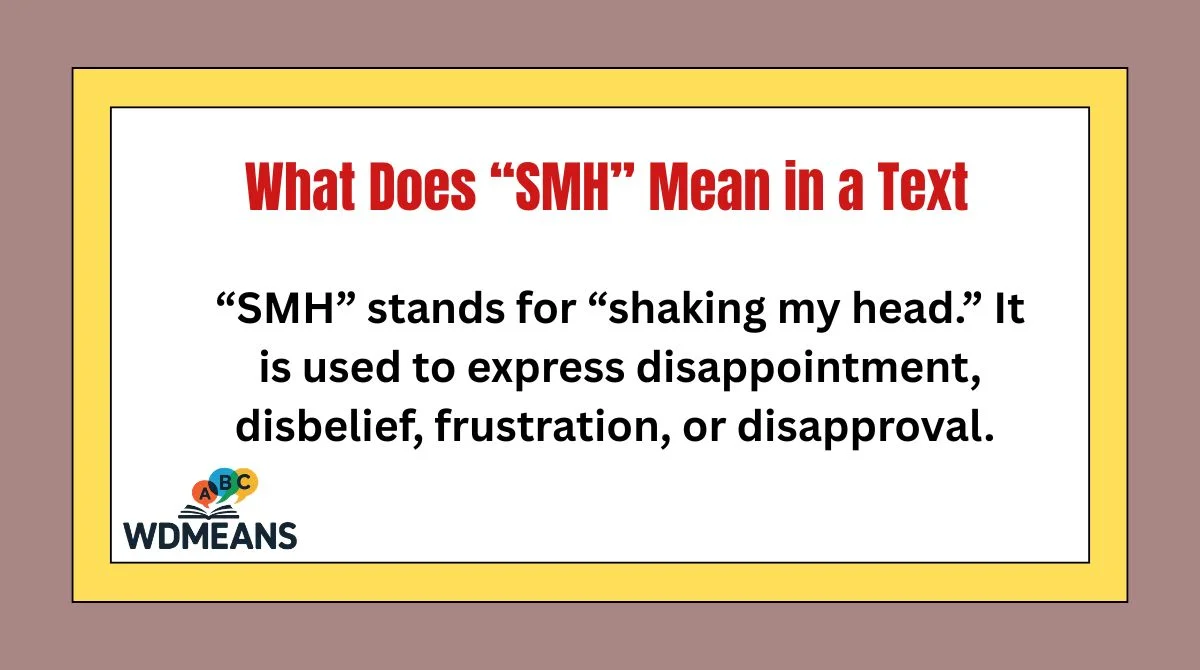
“SMH” stands for “shaking my head.” It is used to express disappointment, disbelief, frustration, or disapproval. When someone uses this abbreviation, they are essentially reacting to something they find foolish, annoying, or hard to believe.
For example:
- “He forgot his keys again, SMH.”
- “People still believe that? SMH.”
In these cases, the person is not literally shaking their head but symbolically expressing a reaction. It replaces a physical gesture with a short, typed expression.
The tone of “SMH” can vary:
- Light frustration: reacting to a minor mistake
- Disbelief: something surprising or ridiculous
- Disappointment: someone’s behavior didn’t meet expectations
Unlike harsh criticism, “SMH” often conveys emotion without being overly aggressive. However, depending on the context, it can come across as sarcastic or judgmental.
Background
“SMH” originated from early internet culture, particularly in chat rooms, forums, and text messaging during the late 1990s and early 2000s. As typing speed and character limits mattered—especially in SMS—users began shortening common phrases into acronyms.
Over time, “SMH” gained popularity on platforms like Facebook, Twitter, and Reddit. Its usage increased as people looked for quick ways to express reactions without writing full sentences. The rise of smartphones and social media accelerated its adoption globally.
Today, “SMH” is widely understood across different age groups, although it remains more common among younger users and those familiar with internet slang. It has become part of everyday digital language, similar to abbreviations like “LOL” or “OMG.”
Usage in Different Contexts (Chat, Social Media, Professional Fields)
In casual conversations, “SMH” is frequently used in texting and messaging apps. It adds emotional tone to otherwise plain text. For instance, when chatting with friends, it can soften criticism or add humor.
On social media, “SMH” often appears in posts or comments reacting to trending topics, news, or viral content. It allows users to quickly show disapproval or disbelief without lengthy explanations.
In professional settings, however, “SMH” is generally not appropriate. Using slang in emails, reports, or formal communication can seem unprofessional. Instead, it’s better to use clear and direct language.
That said, in relaxed workplace chats or internal messaging platforms, some teams may use it informally—but only when the culture allows it.
Meaning in Chat, WhatsApp, Instagram, TikTok
Across platforms, “SMH” keeps its core meaning but adapts slightly to the tone of each space:
- Chat & WhatsApp: Used casually among friends to react quickly
- Instagram: Often appears in captions or comments, sometimes humorously
- TikTok: Used in video captions to express reactions to content
For example, a TikTok video showing a silly mistake might include “SMH” in the caption to emphasize humor or disbelief.
Meaning in Physics, Medical, and Aircraft Terminology
Interestingly, “SMH” can have entirely different meanings in technical fields:
- Physics: It may refer to “simple harmonic motion,” a concept describing oscillating motion like a pendulum.
- Medical field: It could represent specific shorthand depending on context, though it’s less standardized.
- Aircraft terminology: Rarely used, but abbreviations can vary depending on documentation systems.
These meanings are context-specific and unrelated to texting slang, so understanding the environment is crucial.
Common Misconceptions
One common misunderstanding is that “SMH” always implies anger. In reality, it often expresses mild disappointment rather than strong emotion.
Another misconception is that it is rude. While it can sound judgmental, tone depends on context and relationship between speakers.
Some people also confuse it with other abbreviations or assume it has multiple slang meanings, but its primary definition remains consistent.
Similar Terms & Alternatives
There are several alternatives to “SMH,” each with a slightly different tone:
- Facepalm: Expresses embarrassment or disbelief
- OMG: Shows surprise or shock
- Seriously?: Direct expression of disbelief
- Wow: Can imply sarcasm depending on context
These alternatives can sometimes replace “SMH” depending on how strong or subtle the reaction needs to be.
How to Respond to It
Responding to “SMH” depends on the situation:
- If it’s playful: respond humorously
- If it’s critical: clarify your point or explain yourself
- If it’s teasing: acknowledge and move on
Example:
- “SMH, you’re late again.”
- Response: “I know, traffic was chaotic today!”
The key is to read the tone and relationship before reacting.
Differences from Similar Words
“SMH” differs from terms like “LOL” or “OMG” because it expresses disapproval or disappointment, rather than amusement or excitement.
- LOL = laughter
- OMG = surprise
- SMH = disapproval or disbelief
This makes it more negative in tone compared to other common abbreviations.
Relevance in Online Conversations & Dating Apps
In online conversations, especially on dating apps, “SMH” can signal personality and tone. It might be used playfully to tease someone or react to a funny situation.
However, overusing it can come across as overly critical or negative. In early conversations, it’s better to use it lightly and in a friendly tone.
Its relevance lies in its ability to quickly express emotion, making conversations feel more natural and expressive.
Conclusion
“SMH” is a simple yet powerful abbreviation that has become a staple in digital communication. Meaning “shaking my head,” it helps convey disappointment, disbelief, or mild frustration in a quick and relatable way.
From casual chats to social media interactions, it plays a key role in adding emotional context to text-based communication.
While it’s widely accepted in informal settings, understanding when and where to use it is important. Context matters—especially when distinguishing between casual conversation and professional communication.
By learning its meaning, variations, and appropriate usage, you can communicate more effectively and interpret others’ messages with greater clarity.

I am Alexander Hayes, creator of WDMEANS, dedicated to simplifying English learning through clear word meanings. I help learners improve vocabulary with easy, accurate, and practical explanations for everyday use online.