In today’s fast-paced digital world, slang and abbreviations dominate online conversations. One term that often confuses people is “CTFU.”
If you’ve come across this acronym in a text message, social media post, or online chat, you might have wondered what it actually means and how to respond to it.
People search for this phrase because it isn’t always obvious, especially for those unfamiliar with internet slang or generational language trends.
Understanding such expressions is important because they shape how we communicate online. Misinterpreting them can lead to confusion or awkward interactions.
This article provides a clear and structured explanation of what “CTFU” means, where it comes from, and how it is used across different platforms and contexts.
By the end, you’ll not only understand the meaning but also feel confident using or responding to it appropriately in everyday conversations.
Meaning & Definition
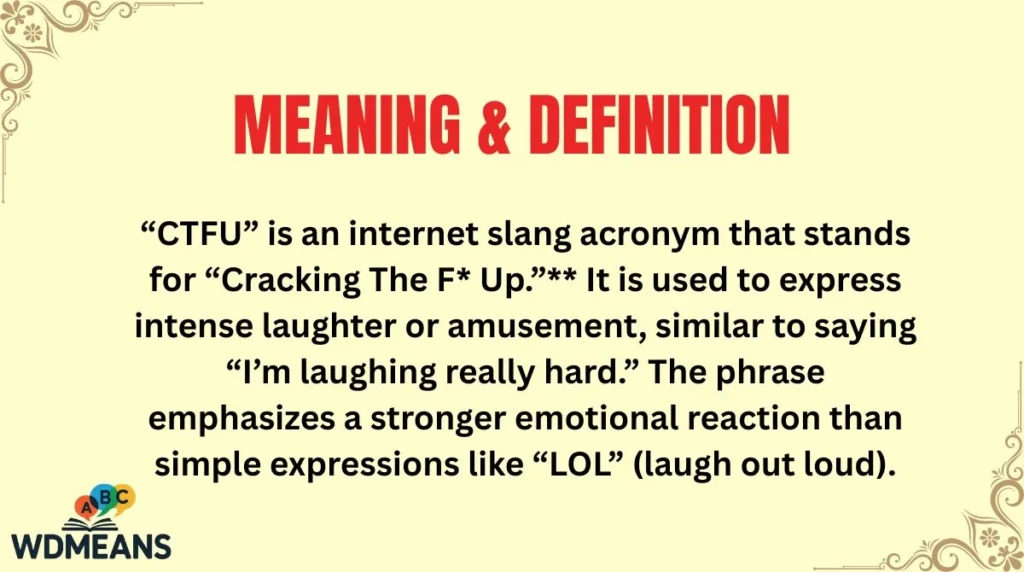
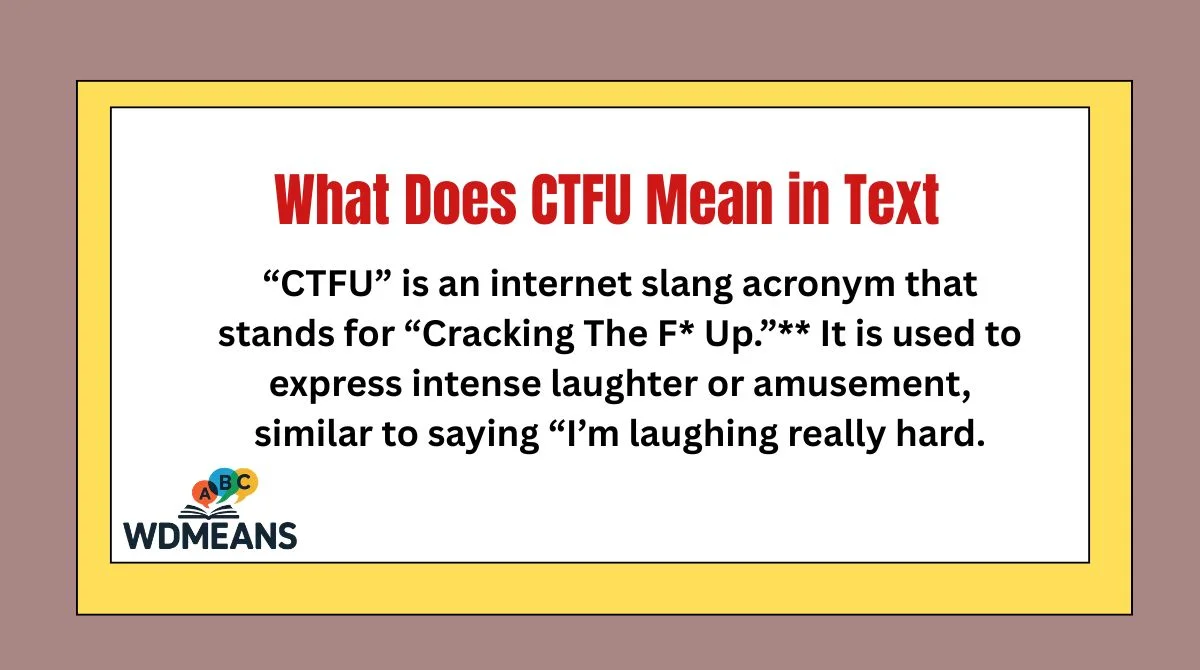
“CTFU” is an internet slang acronym that stands for “Cracking The F* Up.”** It is used to express intense laughter or amusement, similar to saying “I’m laughing really hard.” The phrase emphasizes a stronger emotional reaction than simple expressions like “LOL” (laugh out loud).
When someone uses this term, they are usually reacting to something extremely funny—whether it’s a joke, meme, video, or comment. The inclusion of the expletive adds emphasis, making it more expressive and informal.
For example:
- “That video had me CTFU!”
- “You really said that? CTFU 😂”
In essence, it conveys uncontrollable laughter, often in a casual or humorous setting. However, because it contains implied profanity, it’s generally not suitable for formal or professional communication.
Background
The origin of “CTFU” can be traced back to early internet chat culture, particularly in forums and messaging platforms where users began shortening phrases for speed and convenience. Like many acronyms, it evolved from spoken language into typed communication.
During the rise of texting and instant messaging in the early 2000s, abbreviations such as “LOL,” “LMAO,” and “ROFL” became widely popular. “CTFU” emerged as a more intense alternative, reflecting how language adapts to express stronger emotions.
Social media platforms later accelerated its usage. As memes and viral content became central to online culture, people needed quick ways to react. “CTFU” fit perfectly because it captured exaggerated humor in a concise form.
Its popularity is especially noticeable among younger users and in communities that favor expressive, informal communication. Over time, it has become part of the broader digital slang vocabulary.
Usage in Different Contexts (Chat, Social Media, Professional Fields)
“CTFU” is primarily used in informal settings. In casual chat conversations, it appears frequently when people react to jokes or humorous situations. It adds personality and emotion to otherwise plain text.
On social media platforms like Twitter, Facebook, and comment sections, users often reply with “CTFU” to indicate they found something extremely funny. It’s also commonly paired with emojis such as 😂 to reinforce the meaning.
However, in professional environments, its usage is rare and generally discouraged. Since it includes implied profanity, using it in workplace communication could be seen as inappropriate or unprofessional. Instead, more neutral expressions like “That’s funny” or “That made me laugh” are preferred.
In summary:
- Chat: Very common and expressive
- Social media: Widely used for humor
- Professional fields: Not recommended
Meaning in Chat, WhatsApp, Instagram, TikTok
Across different platforms, the meaning of “CTFU” remains consistent, but its tone and frequency vary.
- Chat & WhatsApp: Often used in private conversations between friends. It shows genuine amusement and is usually part of relaxed, informal exchanges.
- Instagram: Appears in comments or direct messages, especially under funny posts or reels.
- TikTok: Frequently used in comments reacting to comedic videos. It fits well with the platform’s humor-driven content.
On these platforms, the term enhances emotional expression. It replaces the need for long sentences and allows users to react instantly. Despite platform differences, the core idea—laughing very hard—stays the same.
Meaning in Physics, Medical, and Aircraft Terminology
Unlike some acronyms that have multiple meanings across fields, “CTFU” does not have a recognized or standard meaning in technical disciplines such as physics, medicine, or aviation.
- Physics: No established concept or formula uses this abbreviation.
- Medical field: It is not used in clinical terminology or documentation.
- Aircraft/aviation: It does not appear in aviation codes or communication systems.
If “CTFU” appears in these contexts, it is almost certainly being used informally or humorously rather than as a technical term. This distinction is important to avoid confusion when reading professional or academic material.
Common Misconceptions
One common misconception is that “CTFU” is a polite or neutral expression. In reality, it contains implied profanity, which makes it unsuitable for formal communication.
Another misunderstanding is confusing it with other acronyms like “STFU” (which has a completely different and more aggressive meaning). While both include strong language, their tone and purpose differ significantly.
Some people also assume it has multiple technical meanings, but as mentioned earlier, it is purely informal slang.
Similar Terms & Alternatives
There are several alternatives to “CTFU,” depending on the level of intensity you want to convey:
- LOL (Laugh Out Loud): Mild laughter
- LMAO (Laughing My Ass Off): Stronger than LOL
- ROFL (Rolling On the Floor Laughing): Very intense laughter
- LMFAO: Even more exaggerated version
- 😂 emoji: Visual representation of laughter
Each of these serves a similar purpose but varies in tone and intensity.
How to Respond to It
Responding to “CTFU” depends on the context:
- If you shared something funny:
- “Glad you liked it!”
- “I knew you’d laugh 😂”
- If someone reacts with it:
- Continue the humor
- Share more jokes or content
- If unsure of tone:
- Respond casually and positively
The key is to match the informal and lighthearted tone of the conversation.
Differences from Similar Words
“CTFU” differs from other slang terms mainly in intensity and tone. Compared to “LOL,” it suggests much stronger laughter. Unlike “LMAO,” it includes a slightly more expressive or edgy tone due to its phrasing.
It is also less commonly used than some alternatives, which can make it feel more unique or personal in conversations.
Relevance in Online Conversations & Dating Apps
In modern digital communication, expressions like “CTFU” play a big role in building rapport. On dating apps, humor is often used to break the ice, and responding with something like “CTFU” can signal that you share a similar sense of humor.
However, context matters. While it can make conversations feel relaxed and fun, overusing slang or using strong language too early may come across as unpolished. Balance is important—use it when appropriate, but adapt to the tone of the conversation.
Conclusion
“CTFU” is a popular internet slang term used to express strong laughter and amusement. Originating from early chat culture, it has become a common part of modern digital communication, especially on social media and messaging platforms.
While it adds personality and humor to conversations, it remains informal and should be avoided in professional settings.
]Understanding its meaning, usage, and context helps ensure effective communication and prevents misunderstandings.
As online language continues to evolve, knowing terms like this allows you to stay connected and communicate more naturally in digital spaces.

I am Alexander Hayes, creator of WDMEANS, dedicated to simplifying English learning through clear word meanings. I help learners improve vocabulary with easy, accurate, and practical explanations for everyday use online.