In today’s fast-paced digital world, abbreviations and slang dominate online communication.
One such term that often leaves people confused is “SMFH.” If you’ve seen it in messages, social media comments, or chats and wondered what it means, you’re not alone.
People frequently search for this term to better understand modern texting language and avoid misinterpretation in conversations.
Understanding internet slang like this is essential because it helps you communicate more effectively and interpret tone correctly.
Misreading a simple abbreviation can completely change the meaning of a message.
This article provides a detailed explanation of the term, its origins, different meanings across contexts, and how to use or respond to it appropriately.
Whether you’re a casual texter, social media user, or just curious about digital language, this guide will give you a clear and complete understanding.
Meaning & Definition
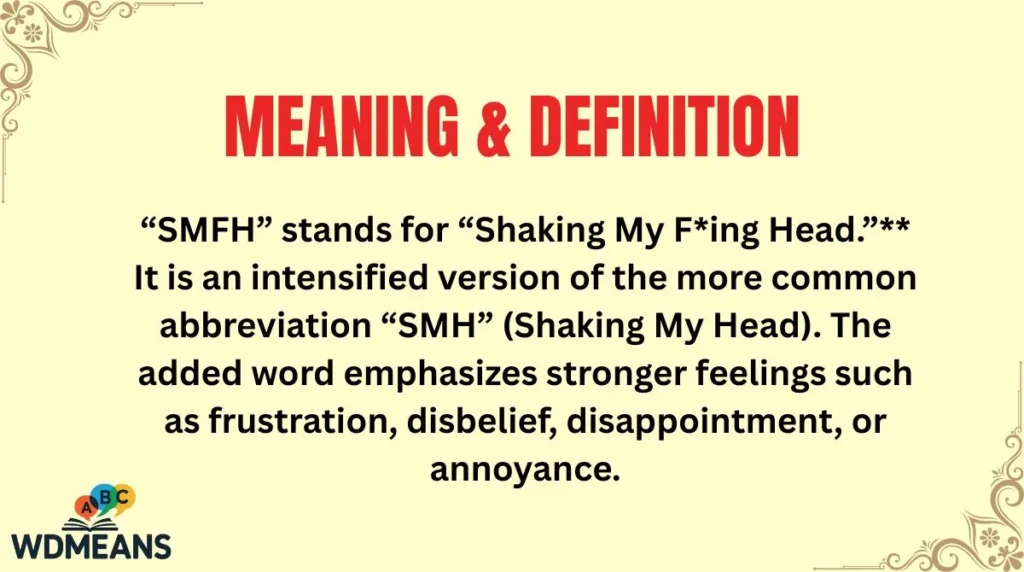
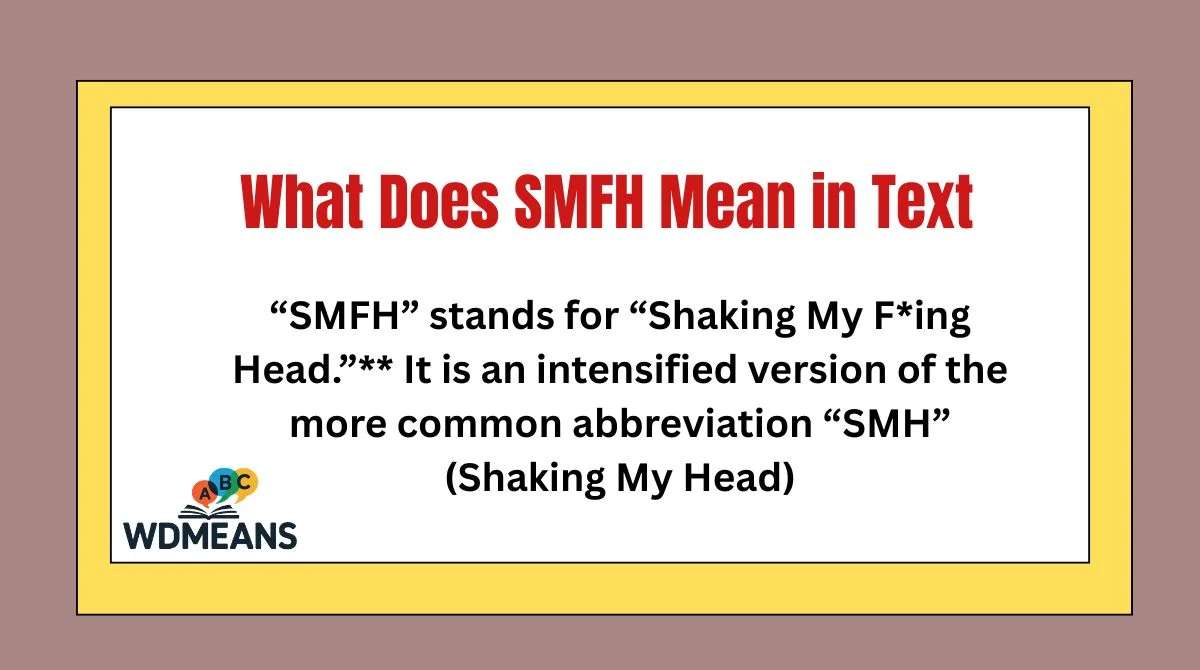
“SMFH” stands for “Shaking My F*ing Head.”** It is an intensified version of the more common abbreviation “SMH” (Shaking My Head). The added word emphasizes stronger feelings such as frustration, disbelief, disappointment, or annoyance.
When someone uses this term, they are usually reacting to something they find ridiculous, foolish, or disappointing. It expresses a non-verbal reaction—similar to physically shaking your head in disapproval—but with stronger emotional weight.
For example:
- “He forgot his own birthday plans… SMFH.”
- “People still believe that rumor? SMFH.”
In both cases, the person is expressing frustration or disbelief without needing a long explanation. The tone can range from mildly annoyed to strongly judgmental, depending on context.
It’s important to note that the abbreviation includes explicit language, which makes it more informal and sometimes inappropriate in professional settings. Despite this, it remains widely used due to its expressive power and brevity.
Background
The term evolved from earlier internet slang, particularly “SMH,” which became popular in online forums and early social media platforms. As digital communication grew, users began intensifying common abbreviations to convey stronger emotions, leading to the creation of “SMFH.”
Its rise can be linked to platforms like messaging apps, online gaming chats, and social media, where quick, expressive communication is valued. Instead of typing a full sentence explaining frustration, users adopted short forms like this to save time while still conveying emotion effectively.
Over time, the abbreviation became part of everyday digital vocabulary, especially among younger audiences. It reflects how language evolves in online spaces—becoming shorter, more expressive, and sometimes more informal or edgy.
Although its exact origin is difficult to pinpoint, it likely emerged organically within internet culture rather than being created by a specific individual or group. Today, it is recognized globally and used across different cultures, even by non-native English speakers.
Usage in Different Contexts
The meaning of this abbreviation can shift slightly depending on where and how it is used.
Casual Chat:
In personal conversations, it’s used to react to something frustrating or disappointing. It often replaces a longer emotional response.
Social Media:
On platforms like Twitter or Facebook, it appears in comments to criticize situations, news, or behavior. It can sometimes come across as sarcastic or judgmental.
Professional Fields:
In formal environments, its use is generally discouraged due to the explicit language it contains. While “SMH” might occasionally appear in informal workplace chats, the stronger version is usually avoided.
Context plays a key role. Among friends, it may feel harmless and relatable. In public or professional settings, it can appear inappropriate or overly negative.
Meaning in Chat, WhatsApp, Instagram, TikTok
Across popular platforms, the term carries a similar core meaning but varies slightly in tone:
- Chat & WhatsApp: Used in private conversations to show frustration or disbelief toward something someone said or did.
- Instagram: Often seen in comments reacting to posts, especially when users disagree or find something absurd.
- TikTok: Used in captions or comments to react humorously or critically to videos, sometimes exaggerating emotions for entertainment.
In these environments, tone is often influenced by emojis, punctuation, or context. For example, adding laughing emojis can soften the negativity, while using it alone can make the reaction seem harsher.
Meaning in Physics, Medical, and Aircraft Terminology
Interestingly, outside of texting slang, this abbreviation does not have a standard or widely accepted meaning in fields like physics, medicine, or aviation.
However, similar-looking abbreviations in technical fields can exist but usually stand for entirely different concepts unrelated to internet slang. For example:
- In medical contexts, abbreviations are typically formal and standardized, so this term would not be used.
- In physics or aviation, abbreviations are technical and precise, unlike informal internet slang.
Therefore, if you encounter it in a scientific or professional document, it is likely either unrelated or used incorrectly.
Common Misconceptions
One common misunderstanding is that the term is harmless or neutral. In reality, it carries a strong emotional tone and includes explicit language, which may offend some people.
Another misconception is that it always expresses anger. While it often signals frustration, it can also reflect disbelief, embarrassment, or even humor depending on context.
Some people also confuse it with “SMH,” assuming they are interchangeable. While similar, the stronger version conveys more intense emotion.
Similar Terms & Alternatives
There are several alternatives that express similar reactions:
- SMH – A milder version without strong language
- Facepalm – Indicates embarrassment or disbelief
- OMG – Shows surprise or shock
- Seriously? – A direct expression of disbelief
Choosing the right alternative depends on how strong you want your reaction to sound and the setting in which you’re communicating.
How to Respond to It
Responding appropriately depends on the context and tone:
- If it’s playful: You can respond humorously or explain your point.
- If it’s critical: Clarify your message or address the concern calmly.
- If it feels harsh: It may be best to de-escalate or ignore it to avoid conflict.
Understanding the intent behind the message is key. Not every use is meant to offend; sometimes it’s just a casual expression of frustration.
Differences from Similar Words
The main difference between this term and similar abbreviations lies in intensity. While “SMH” expresses mild disappointment, this version adds emphasis and stronger emotion.
Compared to expressions like “LOL” or “OMG,” which often convey positive or neutral emotions, this abbreviation is usually negative or critical. This makes it important to use carefully, especially in sensitive conversations.
Relevance in Online Conversations & Dating Apps
In modern online communication, especially on dating apps, tone matters greatly. Using this abbreviation can sometimes come across as judgmental or dismissive, which may negatively impact interactions.
However, among users who are comfortable with casual slang, it can add personality and authenticity. The key is knowing your audience. Overusing strong expressions may create misunderstandings or give the wrong impression.
In general, it’s best used sparingly and in contexts where informal language is expected and accepted.
Conclusion
Understanding what “SMFH” means in text helps you navigate digital conversations more effectively.
It is a powerful expression of frustration, disbelief, or disappointment, commonly used in informal settings.
While it adds emotional emphasis, it also carries strong language, making it unsuitable for professional communication.
As with any slang, context is everything. Knowing when and where to use it—or how to interpret it—can prevent misunderstandings and improve communication.
Whether you encounter it in chats, social media, or casual conversations, recognizing its tone and intent will help you respond appropriately and confidently.

I am Alexander Hayes, creator of WDMEANS, dedicated to simplifying English learning through clear word meanings. I help learners improve vocabulary with easy, accurate, and practical explanations for everyday use online.