In the fast-paced world of digital communication, abbreviations and slang dominate how people interact online.
One such expression that often raises curiosity is “GTFO.” Many users come across it in text messages, social media comments, or online chats and wonder what it really means and whether it’s appropriate to use.
Understanding such terms is important because tone and intent can easily be misunderstood in written communication.
“GTFO” is a widely used internet acronym that can carry different meanings depending on the situation, tone, and relationship between the people involved.
Some interpret it humorously, while others may find it offensive or aggressive. This is why people frequently search for its meaning—to avoid confusion or accidental misuse.
In this article, you’ll learn the full meaning of “GTFO,” its origins, how it’s used across platforms, and how to respond appropriately in different contexts.
Meaning & Definition
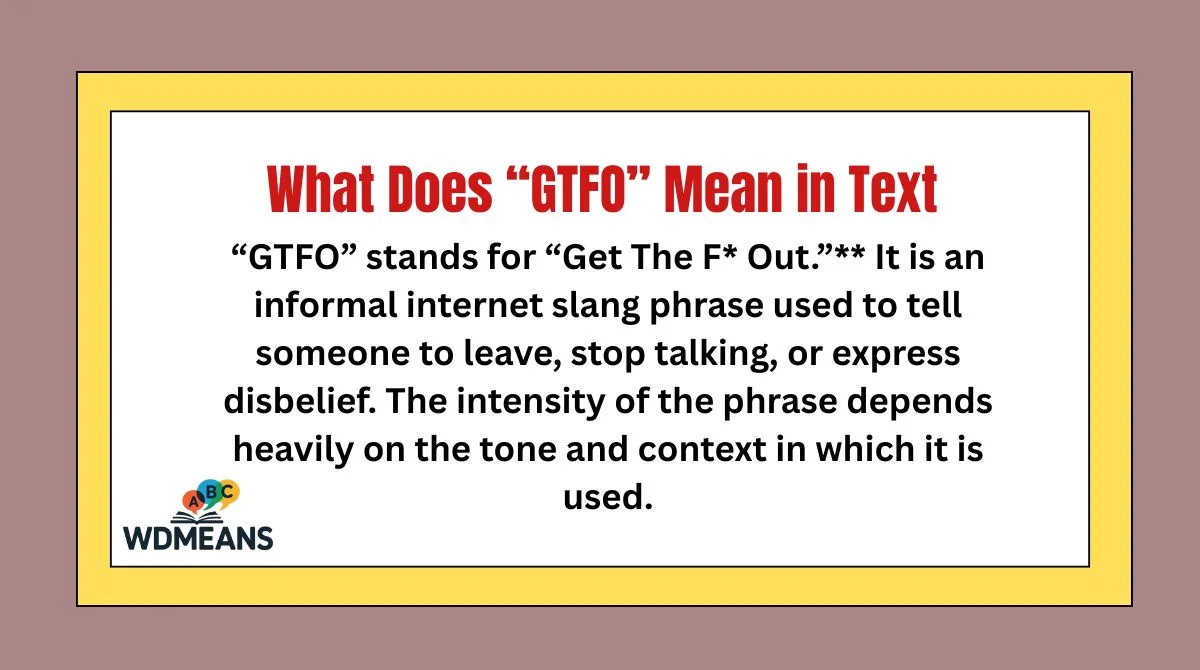
“GTFO” stands for “Get The F* Out.”** It is an informal internet slang phrase used to tell someone to leave, stop talking, or express disbelief. The intensity of the phrase depends heavily on the tone and context in which it is used.
At its core, “GTFO” can serve three main purposes:
- Literal meaning: Telling someone to go away or leave immediately
- Emotional reaction: Expressing shock, surprise, or disbelief
- Humorous exaggeration: Used jokingly among friends
For example:
- “You ate the whole cake? GTFO!” (playful disbelief)
- “If you don’t like it, then GTFO.” (aggressive tone)
Because it includes a profanity, it is considered strong language and may come across as rude or disrespectful if used inappropriately. However, in casual conversations among friends, it is often used lightly and without serious intent.
Background
The phrase “GTFO” originated from early internet culture, particularly in online gaming and chat forums. As communication shifted toward shorter, quicker forms, acronyms became popular for saving time and expressing emotions efficiently.
It gained traction in:
- Online gaming communities
- Internet forums and message boards
- Social media platforms
Over time, “GTFO” evolved beyond its original aggressive meaning. Users began using it sarcastically or humorously, especially in meme culture. Its flexibility allowed it to spread rapidly across platforms, becoming part of everyday digital slang.
Today, it is recognized globally, although its interpretation still varies depending on cultural norms and personal relationships.
Usage in Different Contexts (Chat, Social Media, Professional Fields)
The meaning of “GTFO” shifts depending on where and how it is used.
Casual Chat
In private conversations, especially among friends, it is often playful:
- “You met your favorite celebrity? GTFO, no way!”
Social Media
On platforms like Twitter, Instagram, or Reddit, it may appear in comments or reactions. It can be:
- A humorous reaction
- A sarcastic remark
- Occasionally a harsh dismissal
Gaming Communities
Gamers frequently use it to express frustration or excitement. For example:
- “You beat that level already? GTFO!”
Professional Fields
In formal or workplace communication, “GTFO” is generally inappropriate due to its offensive wording. Using it in emails, meetings, or professional chats can harm your credibility.
Meaning in Chat, WhatsApp, Instagram, TikTok
Across messaging and social platforms, “GTFO” is commonly used but with slightly different tones:
- WhatsApp: Often used among friends in a joking or exaggerated way
- Instagram: Seen in comments, usually expressing surprise or disbelief
- TikTok: Frequently used in captions or reactions to shocking or funny content
- General chat: Can range from friendly teasing to blunt dismissal
The key factor is tone. Without facial expressions or voice, the same phrase can be interpreted very differently.
Meaning in Physics, Medical, and Aircraft Terminology
Unlike some acronyms, “GTFO” does not have an official or recognized meaning in fields like physics, medicine, or aviation.
However, in rare cases:
- It might be used informally in internal communication as slang
- It is not part of standard technical terminology
In professional or academic settings, using “GTFO” would be considered unprofessional and inappropriate.
Common Misconceptions
There are several misunderstandings about “GTFO”:
- It always means anger: Not true—it can be playful or humorous
- It’s safe in all contexts: It can be offensive in formal settings
- Everyone interprets it the same way: Cultural and personal differences affect meaning
Understanding context is essential to avoid miscommunication.
Similar Terms & Alternatives
If you want to avoid strong language, there are softer alternatives:
- “No way!”
- “Seriously?”
- “You’re kidding!”
- “Get out of here!” (non-offensive version)
- “That’s unbelievable!”
These expressions convey similar emotions without sounding rude.
How to Respond to It
Your response should depend on the tone and context:
- If playful:
Respond humorously: “Haha, I’m serious!” - If aggressive:
Stay calm or disengage: “Let’s keep it respectful.” - If unclear:
Ask for clarification: “Do you mean that as a joke?”
Understanding intent helps prevent unnecessary conflict.
Differences from Similar Words
“GTFO” is stronger than many similar phrases because it includes profanity. For example:
- “Get out” → Neutral
- “Go away” → Mild
- “GTFO” → Strong, potentially offensive
It carries more emotional weight and should be used carefully.
Relevance in Online Conversations & Dating Apps
In modern online communication, especially dating apps, tone matters more than ever.
- Positive use: Playful teasing between people who already understand each other
- Negative use: Can come off as rude, dismissive, or disrespectful
Using “GTFO” early in conversations—especially with someone new—can create a bad impression. It’s best reserved for informal, friendly interactions where both parties understand the intent.
Conclusion
“GTFO” is a widely used internet slang term that stands for “Get The F*** Out.”
While it originally carried a harsh and dismissive tone, it has evolved into a flexible expression that can convey humor, surprise, or disbelief depending on context.
However, because it contains strong language, it should be used with caution, especially in professional or unfamiliar settings.
Understanding when and how to use “GTFO” is key to effective communication. Tone, relationship, and platform all play a role in how the phrase is interpreted.
When in doubt, choosing a softer alternative can help avoid misunderstandings.

I am Alexander Hayes, creator of WDMEANS, dedicated to simplifying English learning through clear word meanings. I help learners improve vocabulary with easy, accurate, and practical explanations for everyday use online.