In today’s fast-paced digital world, new slang terms appear almost daily, leaving many people confused about their meanings.
One such term that has gained popularity across texting, social media, and online conversations is “FAFO.” If you’ve come across it in a message, meme, or comment and wondered what it means, you’re not alone.
People often search for this phrase to better understand its tone, implications, and appropriate usage.
“FAFO” is more than just a random abbreviation—it carries a strong message and is often used to convey a warning, consequence, or bold attitude.
Understanding this term can help you better interpret online interactions and avoid misunderstandings.
In this article, we’ll break down its meaning, origin, usage across different platforms, and how you should respond when someone uses it.
Meaning & Definition
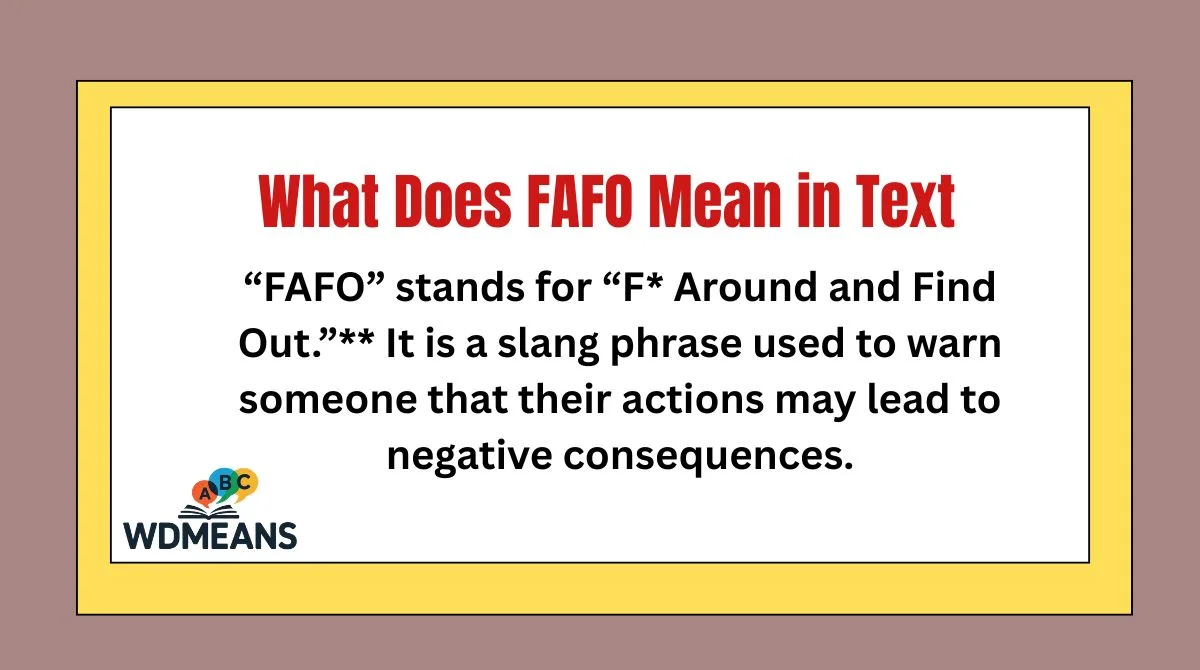
“FAFO” stands for “F* Around and Find Out.”** It is a slang phrase used to warn someone that their actions may lead to negative consequences. The phrase implies that if a person behaves recklessly, provocatively, or irresponsibly, they will eventually face the results of their actions—often in an unpleasant way.
At its core, FAFO carries a tone of cause and effect. It suggests that consequences are inevitable when someone pushes boundaries too far. The phrase can be used seriously as a warning or humorously in a sarcastic or exaggerated context.
For example:
- “You keep ignoring deadlines? FAFO.”
- “He tried to mess with the system and… FAFO.”
The meaning depends heavily on context. Sometimes it’s used jokingly among friends, while other times it can sound aggressive or confrontational. Because of the strong language behind the acronym, it is generally considered informal and not suitable for professional environments.
Background
The phrase behind FAFO has existed in spoken language for years, but its abbreviation became popular with the rise of internet culture. Social media platforms, meme culture, and online forums played a significant role in spreading it widely.
FAFO gained traction because it is short, impactful, and expressive. Internet users prefer quick ways to communicate strong emotions or ideas, and this abbreviation perfectly fits that need. It also aligns with the trend of using acronyms like “LOL,” “BRB,” and “IMO,” but with a more intense tone.
Memes and viral videos have contributed to its popularity. Often, it’s used in situations where someone makes a bad decision and immediately faces consequences—making it relatable and shareable.
Over time, FAFO has evolved into a cultural expression that reflects modern communication styles: bold, direct, and sometimes edgy. Its widespread use shows how language adapts quickly in digital spaces.
Usage in Different Contexts (Chat, Social Media, Professional Fields)
FAFO is primarily used in informal settings, especially in chats and social media interactions. In text messages or group chats, it can be used jokingly among friends to tease someone about their actions. For instance, if someone decides to take a risky shortcut or ignore advice, another person might respond with “FAFO” to hint at possible consequences.
On social media platforms, FAFO is often seen in comments, captions, and memes. It is commonly used to describe situations where someone ignored warnings and faced predictable outcomes. The tone here can range from humorous to critical, depending on the context.
In contrast, FAFO is rarely appropriate in professional environments. Due to its explicit origin, using it in workplace communication, emails, or formal discussions can come across as unprofessional or even offensive. However, in casual workplace chats among close colleagues, it might occasionally appear in a lighthearted manner—though this depends heavily on the company culture.
Overall, FAFO is best reserved for informal communication where tone and context are clearly understood.
Meaning in Chat, WhatsApp, Instagram, TikTok
Across different platforms, FAFO maintains the same core meaning but may vary slightly in tone.
- Chat & WhatsApp: Often used in private conversations. It can be playful, sarcastic, or mildly threatening depending on the relationship between users.
- Instagram: Commonly appears in captions or comments, especially on posts showing consequences or dramatic moments.
- TikTok: Frequently used in videos where someone takes a risk or makes a questionable decision, followed by the outcome.
In these platforms, FAFO is often tied to storytelling—highlighting a cause-and-effect moment in a short, impactful way. The tone is usually casual and expressive.
Meaning in Physics, Medical, and Aircraft Terminology
Unlike many acronyms, FAFO does not have an official meaning in fields like physics, medicine, or aviation. It is strictly an informal slang term.
However, in rare cases, people might mistakenly assume it has a technical meaning due to its acronym format. In professional or academic contexts, FAFO is generally not recognized and should not be used.
If you encounter FAFO in such fields, it is most likely being used humorously or informally rather than as a legitimate technical term.
Common Misconceptions
One common misconception is that FAFO is always aggressive or threatening. While it can carry a strong tone, it is often used humorously or sarcastically among friends.
Another misunderstanding is that it has a formal or technical meaning. As mentioned earlier, FAFO is purely slang and does not belong in academic or professional terminology.
Some people also assume it is universally offensive. While it includes explicit language, many users treat it casually in informal settings.
Similar Terms & Alternatives
Several phrases convey a similar meaning to FAFO, including:
- “You’ll regret it”
- “Actions have consequences”
- “Play foolish games, win foolish prizes”
- “Mess around and see what happens”
These alternatives are often more appropriate in formal or polite conversations.
How to Respond to It
Your response to FAFO depends on the context and tone.
- If used jokingly: You can respond playfully or laugh it off.
- If used seriously: It may be a warning, so consider the situation carefully.
- If it feels aggressive: Stay calm and avoid escalating the conversation.
Understanding the intent behind the message is key to responding appropriately.
Differences from Similar Words
FAFO differs from other phrases because of its directness and intensity. While phrases like “be careful” or “watch out” are softer, FAFO delivers a stronger, more immediate sense of consequence.
It also stands out due to its abbreviation form, making it more suitable for quick digital communication.
Relevance in Online Conversations & Dating Apps
In online conversations and dating apps, FAFO can be used to express confidence, humor, or boundaries. For example, someone might use it to signal that they won’t tolerate disrespect or games.
However, tone matters greatly. In dating contexts, it can come across as bold or even intimidating, so it should be used carefully. When used appropriately, it can add personality to conversations, but misuse may lead to misunderstandings.
Conclusion
FAFO is a modern slang term that captures the idea of cause and consequence in a bold, memorable way.
While it originated as a blunt phrase, its abbreviation has made it widely acceptable in informal digital communication.
Understanding its meaning and tone helps you navigate conversations more effectively and avoid misinterpretation.
Although it is popular on social media and messaging platforms, it’s important to use it appropriately and avoid professional settings where it may seem inappropriate.
Like many internet expressions, its impact depends on context, intent, and audience.

I am Alexander Hayes, creator of WDMEANS, dedicated to simplifying English learning through clear word meanings. I help learners improve vocabulary with easy, accurate, and practical explanations for everyday use online.