In today’s fast-paced digital world, abbreviations and acronyms dominate online communication. One such widely used term is “WFH.”
If you’ve seen it in messages, emails, or social media and wondered what it means, you’re not alone.
Many people search for this term to better understand modern communication, especially as remote work has become more common.
“WFH” is simple on the surface, but its meaning can vary slightly depending on the context in which it’s used.
Whether you’re chatting with friends, scrolling through social media, or reading professional emails, understanding this acronym can help you stay informed and avoid confusion.
This article breaks down the meaning of WFH, its background, how it’s used across different platforms and industries, and how to respond when someone uses it.
Meaning & Definition
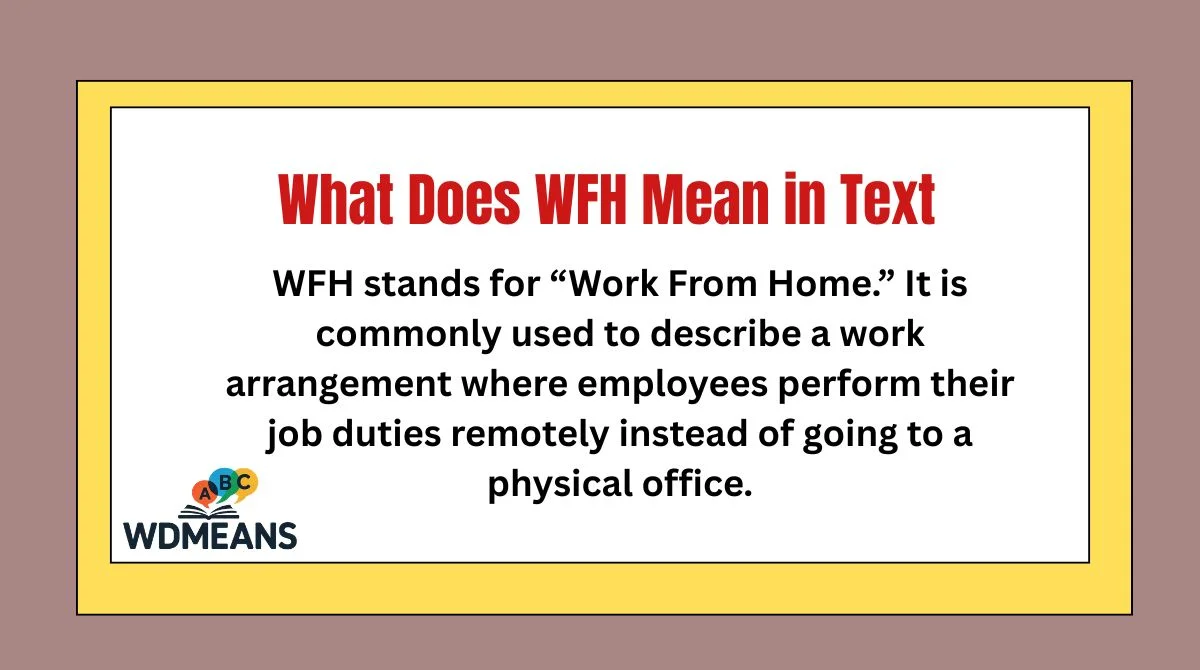
WFH stands for “Work From Home.” It is commonly used to describe a work arrangement where employees perform their job duties remotely instead of going to a physical office.
In text messages or online conversations, WFH is often used as a quick way to explain availability or location. For example:
- “I’m WFH today, so I can join the call anytime.”
- “Can’t meet in person, I’m WFH this week.”
The abbreviation is valued for its simplicity and efficiency, especially in fast communication where typing full sentences may not be necessary. While the meaning is generally straightforward, the tone can vary depending on context—sometimes casual, sometimes professional.
Background
The concept of working from home isn’t new, but the term “WFH” gained massive popularity in the 21st century, especially with the rise of digital communication tools. It became even more widespread during global events like the COVID-19 pandemic, when remote work shifted from being optional to essential for many industries.
As businesses adapted to remote operations, employees began using shorthand expressions like WFH in emails, chats, and internal communication systems. Over time, it became part of everyday language, not just in workplaces but also in casual conversations.
Today, WFH represents more than just a location—it reflects a broader shift toward flexible work environments, digital collaboration, and work-life balance.
Usage in Different Contexts (Chat, Social Media, Professional Fields)
WFH is highly versatile and appears in a variety of contexts:
1. Casual Chat:
In personal conversations, WFH is used informally to explain why someone is at home or unavailable for outings.
2. Social Media:
People use WFH in captions or posts to share their daily routines, home office setups, or productivity tips.
3. Professional Communication:
In emails or workplace messaging apps, WFH indicates work status. It helps colleagues understand availability, schedule flexibility, and communication preferences.
For example:
- “I’m WFH today due to a meeting schedule.”
- “WFH tomorrow—please reach me via email.”
Meaning in Chat, WhatsApp, Instagram, TikTok
Across different platforms, WFH maintains the same core meaning but adapts to tone and style:
- Chat & WhatsApp: Quick and direct. Used to inform others about availability.
- Instagram: Often appears in captions like “WFH vibes” or “Another WFH day ☕💻.”
- TikTok: Used in videos showcasing home office setups, productivity hacks, or humorous takes on remote work life.
In these spaces, WFH can also carry emotional or lifestyle connotations—relaxed, flexible, or sometimes even stressful depending on the situation.
Meaning in Physics, Medical, and Aircraft Terminology
Interestingly, WFH is not commonly used as a standard abbreviation in technical fields like physics, medicine, or aviation.
- Physics: WFH does not have a recognized scientific meaning.
- Medical Field: It may occasionally be used informally to indicate a healthcare worker working remotely, but it is not an official medical abbreviation.
- Aircraft/Aviation: WFH is not a standard aviation term.
In these fields, abbreviations tend to be highly specific and regulated, so WFH is mostly limited to general or workplace communication rather than technical usage.
Common Misconceptions
One common misconception is that WFH always means someone is completely free or relaxed. In reality, working from home still involves full job responsibilities and schedules.
Another misunderstanding is assuming WFH implies flexibility. While some remote jobs offer flexible hours, many still require strict working times and availability.
Some people also confuse WFH with being off work, which is incorrect. It simply means the work location has shifted from office to home.
Similar Terms & Alternatives
Several related terms are often used alongside or instead of WFH:
- Remote Work (RW): A broader term that includes working from any location.
- Telecommuting: A more formal term for working remotely.
- Hybrid Work: A mix of office and home-based work.
- WFAnywhere (Work From Anywhere): A newer trend allowing complete location flexibility.
Each of these terms overlaps with WFH but carries slightly different implications regarding flexibility and location.
How to Respond to It
When someone says “WFH,” your response depends on the context:
- Professional Setting:
“Got it, I’ll reach you online.”
“Thanks for letting me know.” - Casual Chat:
“Nice, hope it’s a chill day!”
“Lucky you, no commute today!” - Planning Conversations:
“Since you’re WFH, can we meet virtually?”
The key is to acknowledge the information and adjust communication accordingly.
Differences from Similar Words
WFH differs from similar terms in subtle but important ways:
- WFH vs Remote Work: WFH specifically means working from home, while remote work can happen anywhere.
- WFH vs Hybrid Work: Hybrid involves both office and home, while WFH is fully home-based for that period.
- WFH vs Day Off: WFH still involves working, unlike a leave or holiday.
Understanding these differences helps avoid confusion, especially in professional communication.
Relevance in Online Conversations & Dating Apps
WFH has also found its way into informal online spaces like dating apps and casual chats. People may mention it in profiles or conversations to describe their lifestyle or schedule.
For example:
- “Mostly WFH, so I’m flexible with timing.”
- “WFH life gets boring—looking for someone to chat with!”
In these contexts, it can signal availability, personality, or even a preference for staying in rather than going out.
Conclusion
WFH, meaning “Work From Home,” is a simple yet powerful acronym that reflects modern work culture and communication trends.
Its usage spans professional environments, social media, and casual conversations, making it an essential term to understand in today’s digital world.
While its core meaning remains consistent, the context in which it’s used can influence tone and interpretation.
From indicating work status to shaping lifestyle discussions, WFH has become a key part of everyday language.
By understanding its meaning, variations, and proper responses, you can communicate more effectively and confidently in both personal and professional settings.

I am Alexander Hayes, creator of WDMEANS, dedicated to simplifying English learning through clear word meanings. I help learners improve vocabulary with easy, accurate, and practical explanations for everyday use online.