In today’s fast-paced digital world, abbreviations and slang dominate how people communicate online. One such commonly used abbreviation is “GL.”
Many people encounter it in chats, social media, or even professional contexts and wonder what it actually means.
Understanding these short forms is important because their meaning can vary depending on the situation, platform, or conversation.
“GL” is widely used because it is quick, simple, and easy to type, making it ideal for texting and online messaging.
However, its meaning is not always obvious to everyone, especially those new to digital communication or unfamiliar with specific communities like gaming or technical fields.
This article provides a detailed explanation of what “GL” means, where it comes from, how it is used in different contexts, and how to respond when someone uses it.
By the end, you will clearly understand how to interpret and use “GL” correctly in any situation.
Meaning & Definition
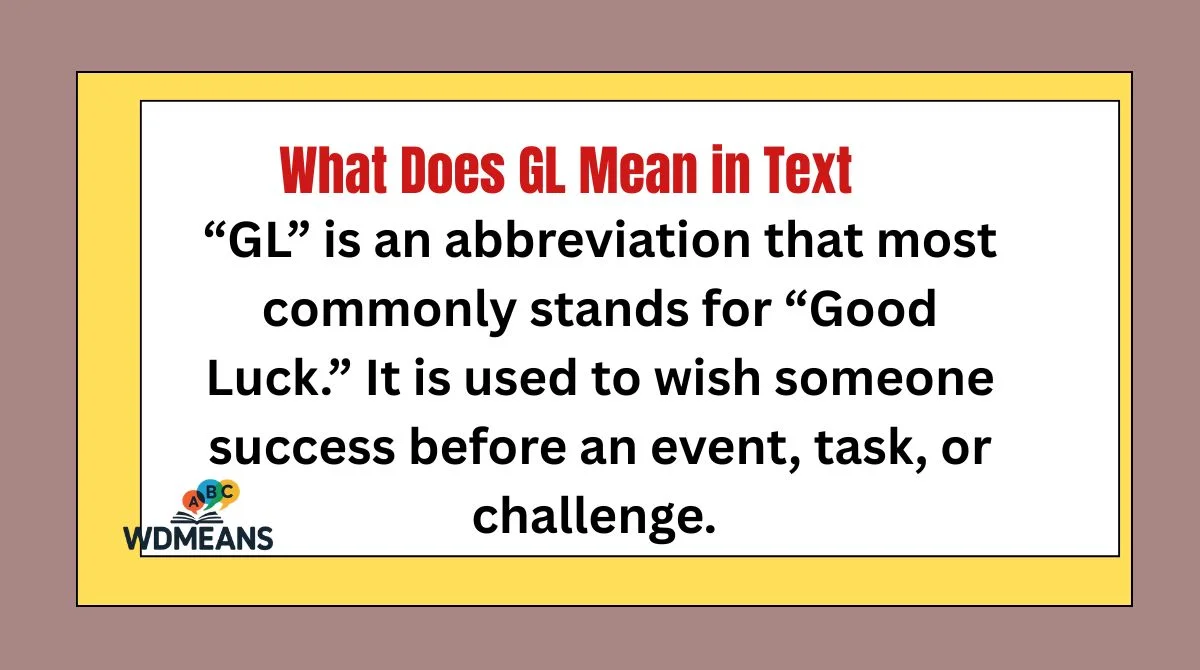
“GL” is an abbreviation that most commonly stands for “Good Luck.” It is used to wish someone success before an event, task, or challenge. This meaning is especially popular in casual conversations, gaming environments, and social media interactions.
For example, if someone says they have an exam, a job interview, or a competition, another person might reply with “GL” to show encouragement. It conveys positivity in a short, efficient way without needing a full sentence.
However, “GL” can have multiple meanings depending on context. Some alternative interpretations include:
- Good Luck (most common)
- Good Life (less common, motivational context)
- Group Leader (in professional or organizational settings)
- Graphics Library (in technical or programming discussions)
Because abbreviations can overlap across different fields, the intended meaning of “GL” often depends on the conversation topic and the relationship between the people communicating.
Despite these variations, “Good Luck” remains the dominant and widely accepted meaning in everyday text messaging and online communication.
Background
The use of abbreviations like “GL” dates back to the early days of internet chatrooms and SMS texting. When character limits were strict and typing on mobile devices was slower, users developed shorthand expressions to communicate more efficiently.
“GL” gained popularity particularly in online gaming communities. Players would often type “GL” before starting a match as a way to show sportsmanship and mutual respect. Over time, this habit spread beyond gaming into general online communication.
As messaging platforms evolved—from SMS to instant messaging apps—short forms like “GL” remained popular because they save time and maintain a casual tone. Today, they are deeply embedded in digital culture and are used by people of all age groups.
The continued use of “GL” reflects how language adapts to technology. It shows how communication becomes more concise while still expressing emotion and intent clearly.
Usage in Different Contexts (Chat, Social Media, Professional Fields)
“GL” is versatile and appears in various environments, each giving it a slightly different nuance.
In casual chat, it is most often used as a friendly gesture. For instance, if a friend mentions an upcoming test or presentation, replying with “GL!” is a quick way to show support.
On social media, “GL” may appear in comments or captions. People use it to encourage others publicly, such as before competitions, performances, or big announcements.
In gaming communities, “GL” is almost a tradition. Players often say “GL HF” (Good Luck, Have Fun) at the beginning of matches. This reflects a culture of respect and fair play.
In professional settings, “GL” is less common but can still appear in informal communication. For example, colleagues might use it in internal chats before presentations or deadlines. However, in formal emails or documents, the full phrase “Good Luck” is usually preferred.
Understanding the tone of the environment helps determine whether using “GL” is appropriate or if a more formal expression should be used.
Meaning in Chat, WhatsApp, Instagram, TikTok
On platforms like WhatsApp, Instagram, and TikTok, “GL” almost always means “Good Luck.”
- WhatsApp: Used in personal conversations to encourage friends or family.
- Instagram: Appears in comments under posts related to achievements, events, or challenges.
- TikTok: Often used in comment sections or captions to support creators trying something new.
The tone on these platforms is usually informal, so abbreviations like “GL” fit naturally. It helps keep conversations quick and engaging, especially when users are interacting with many people at once.
In these contexts, “GL” carries a friendly, supportive tone and is rarely misunderstood.
Meaning in Physics, Medical, and Aircraft Terminology
Outside casual communication, “GL” can have specialized meanings in technical fields.
In physics, “GL” may refer to specific concepts or models depending on context, though it is not a universal abbreviation. Its meaning is usually defined within the subject or document.
In the medical field, “GL” might stand for terms like “Glucose Level.” Here, it is used in reports or discussions related to patient health.
In aviation, “GL” can appear in terms like “Ground Level” or “Above Ground Level (AGL).” It helps describe altitude measurements relative to the Earth’s surface.
These meanings are context-specific and typically used among professionals. Unlike texting, they require background knowledge to interpret correctly.
Common Misconceptions
A common misconception is that “GL” always means the same thing. While “Good Luck” is the most popular meaning, assuming it applies in every situation can lead to confusion.
Another misunderstanding is thinking “GL” is too informal for all situations. While it may not suit formal writing, it is perfectly acceptable in casual workplace chats or team communications.
Some people also confuse “GL” with similar abbreviations like “GN” (Good Night) or “GM” (Good Morning), which can change the entire meaning of a message.
Similar Terms & Alternatives
There are several alternatives to “GL” that convey similar encouragement:
- Good luck
- Best of luck
- You’ve got this
- All the best
- Fingers crossed
In gaming or online culture, phrases like “HF” (Have Fun) or “GG” (Good Game) are often used alongside or instead of “GL.”
Choosing between these depends on tone and context. “GL” is best when you want something short and casual.
How to Respond to It
Responding to “GL” is simple and depends on your tone:
- “Thanks!” – Most common and polite
- “Thank you!” – Slightly more formal
- “Appreciate it!” – Friendly and warm
- “I’ll need it!” – Light humor
Acknowledging the message shows appreciation and keeps the conversation engaging.
Differences from Similar Words
“GL” differs from other abbreviations mainly in purpose:
- GL (Good Luck): Encouragement before an event
- GG (Good Game): Used after a game ends
- HF (Have Fun): Focuses on enjoyment rather than success
Understanding these differences helps avoid miscommunication, especially in gaming or online communities.
Relevance in Online Conversations & Dating Apps
In online conversations and dating apps, “GL” is used to show support or positivity. For example, if someone mentions a big day or personal goal, replying with “GL” keeps the tone friendly and encouraging.
On dating apps, it can also appear when someone is moving on or ending a conversation politely, wishing the other person well.
Its simplicity makes it a useful tool for maintaining a positive tone without overcomplicating the message.
Conclusion
“GL” is a simple yet powerful abbreviation that primarily means “Good Luck.” Its widespread use across chats, social media, and even some professional environments highlights how modern communication values speed and clarity.
While it can have different meanings in technical fields like medicine or aviation, its most common use remains supportive and encouraging.
Understanding the context in which “GL” is used is key to interpreting it correctly. Whether you are chatting with friends, commenting online, or participating in gaming communities, knowing how and when to use “GL” helps you communicate more effectively.
As digital language continues to evolve, abbreviations like “GL” will remain an essential part of everyday interaction.

I am Alexander Hayes, creator of WDMEANS, dedicated to simplifying English learning through clear word meanings. I help learners improve vocabulary with easy, accurate, and practical explanations for everyday use online.