In today’s fast-paced digital communication world, abbreviations and slang dominate how people express emotions quickly and casually. One such commonly used term is “FML.”
If you’ve come across it in a message or social media post and felt confused, you’re not alone. Many people search for its meaning to better understand conversations and avoid misinterpretation.
“FML” is widely used across texting, messaging apps, and online platforms, often conveying frustration, disappointment, or humor in difficult situations.
Its popularity stems from how efficiently it communicates strong emotions in just three letters. Understanding its meaning and context is essential, especially since it can carry different tones depending on how it’s used.
This article breaks down everything you need to know—from its definition and origins to how it’s used in various contexts, including casual chats and professional settings.
Meaning & Definition
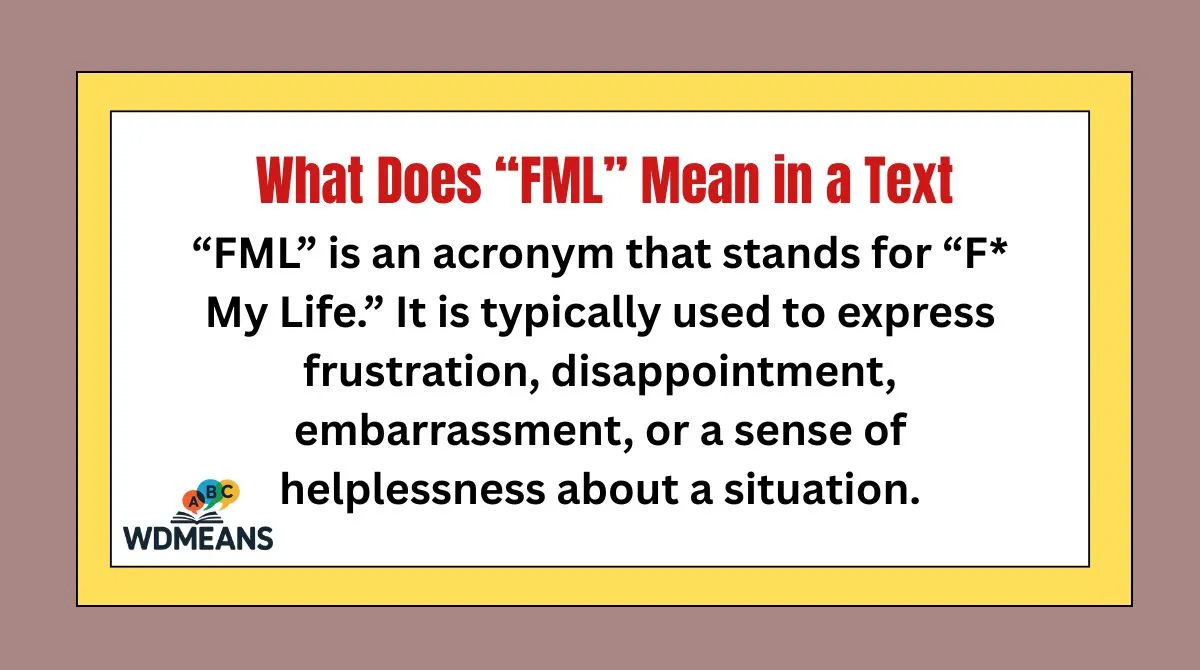
“FML” is an acronym that stands for “F* My Life.” It is typically used to express frustration, disappointment, embarrassment, or a sense of helplessness about a situation. While the phrase includes profanity, it is often used casually and sometimes even humorously.
For example:
- “I just dropped my phone and cracked the screen… FML.”
- “Missed my flight by 5 minutes. FML.”
In these cases, the sender is not necessarily experiencing a life-ending crisis but is venting about a frustrating moment. The tone can range from serious annoyance to lighthearted exaggeration.
Despite its negative wording, “FML” is often used playfully among friends. It can turn minor inconveniences into relatable, comedic moments. However, its meaning always revolves around expressing dissatisfaction with a situation.
It’s important to note that the emotional intensity depends on context. In some cases, it may signal genuine distress, while in others, it simply reflects everyday annoyance.
Background
The phrase behind “FML” gained popularity in the early 2000s, especially with the rise of internet culture and blogging platforms. It became widely recognized through a website called “FMyLife,” where users shared short, unfortunate life stories ending with the phrase.
As texting and social media platforms like early messaging apps evolved, people began shortening phrases to save time and space. “FML” quickly became a go-to expression because it captured strong emotion in a compact form.
Over time, the term spread globally and became part of everyday digital language. Its usage expanded beyond just storytelling into casual conversations, memes, and online humor.
Today, “FML” is universally understood among internet users, particularly younger generations. While it originated as a blunt expression of frustration, its tone has softened in many contexts, often used with irony or sarcasm.
Usage in Different Contexts (Chat, Social Media, Professional Fields)
In casual chats, “FML” is commonly used to vent about daily inconveniences. Friends often use it to share relatable struggles, making conversations feel more expressive and authentic.
On social media, the term is frequently seen in captions, comments, and memes. People use it to dramatize situations humorously, such as bad weather, awkward moments, or minor failures.
In professional settings, however, “FML” is generally considered inappropriate. Because it contains implicit profanity, using it in emails, workplace chats, or formal communication can come across as unprofessional. Instead, people may choose more neutral phrases like “That’s unfortunate” or “This is frustrating.”
Interestingly, in creative or informal industries, such as digital marketing or content creation, the term might occasionally appear in internal chats where casual language is accepted. Still, discretion is advised.
Overall, the acceptability of “FML” depends heavily on the audience and environment.
Meaning in Chat, WhatsApp, Instagram, TikTok
Across messaging and social platforms, “FML” maintains a similar core meaning but can vary slightly in tone.
- Chat & WhatsApp: Often used in real-time conversations to express frustration or seek empathy. It can also invite a supportive or humorous response.
- Instagram: Commonly appears in captions or stories describing a bad day or embarrassing moment, often paired with emojis for tone.
- TikTok: Used in video captions or comments, usually in a humorous or exaggerated way to enhance storytelling or relatable content.
For example:
- A TikTok showing someone tripping might end with “FML 😂”
- An Instagram story about losing keys might include “FML” with a sad emoji
In these platforms, the phrase often leans toward humor rather than serious distress.
Meaning in Physics, Medical, and Aircraft Terminology
While “FML” is primarily slang, it can have different meanings in specialized fields:
- Physics: Rarely used, but could refer to specific abbreviations depending on context (not commonly standardized).
- Medical: May stand for terms like “Familial,” as in familial conditions, though this usage is uncommon and context-specific.
- Aircraft/Aviation: Could be used as an abbreviation in technical documentation, but it is not a standard aviation term.
In professional or academic contexts, “FML” is rarely used in its slang sense. Instead, any interpretation would depend on the specific field and documentation.
Common Misconceptions
One common misconception is that “FML” always indicates serious emotional distress. In reality, it is often used humorously or sarcastically.
Another misunderstanding is that it is universally appropriate. While widely accepted among friends, it may be offensive or inappropriate in formal environments.
Some people also assume it has multiple fixed meanings across all contexts, but in most cases, it simply reflects frustration unless clearly defined otherwise.
Similar Terms & Alternatives
Several phrases convey similar emotions without using profanity:
- “Just my luck”
- “What a day”
- “This sucks”
- “I can’t believe this”
- “Why me?”
For a lighter tone, people might use:
- “LOL, my life”
- “Typical me”
These alternatives are especially useful in professional or mixed audiences.
How to Respond to It
Responding to “FML” depends on the tone and situation:
- Supportive: “That sounds really frustrating. Hope it gets better.”
- Humorous: “Classic bad luck 😅”
- Solution-oriented: “Maybe you can fix it by doing this…”
The key is to match the sender’s tone—serious if they’re upset, light if they’re joking.
Differences from Similar Words
“FML” differs from phrases like “LOL” or “SMH” in emotional tone.
- LOL (Laugh Out Loud): Expresses humor
- SMH (Shaking My Head): Shows disbelief or disappointment
- FML: Focuses on frustration or self-directed negativity
Unlike neutral phrases, “FML” carries stronger emotional weight due to its wording.
Relevance in Online Conversations & Dating Apps
In online conversations and dating apps, “FML” can serve as an icebreaker or a way to show vulnerability. Sharing minor frustrations can make someone seem more relatable and human.
However, overusing it or expressing excessive negativity might create a poor impression. Balance is important—occasional use can add personality, but constant complaints may push people away.
In dating contexts, it’s best used humorously rather than seriously, helping keep conversations light and engaging.
Conclusion
“FML” is a widely recognized acronym that captures frustration, disappointment, or humor in everyday situations. Its meaning is simple, but its tone can vary greatly depending on context, platform, and audience.
From casual chats to social media posts, it has become a staple of modern digital communication.
While it is effective for expressing emotions quickly, it’s important to use it appropriately. Understanding when and where it fits ensures clear communication and avoids misunderstandings.
Whether used seriously or playfully, “FML” reflects how language continues to evolve in the digital age.

I am Alexander Hayes, creator of WDMEANS, dedicated to simplifying English learning through clear word meanings. I help learners improve vocabulary with easy, accurate, and practical explanations for everyday use online.