In today’s fast-paced digital world, new slang terms appear almost daily, especially across social media platforms and messaging apps. One such phrase that has gained popularity is “BFFR.”
Many people encounter it in chats, comments, or videos and immediately wonder what it stands for and how to use it correctly.
Understanding modern internet slang like this is essential for staying connected and avoiding miscommunication, particularly among younger audiences and online communities.
“BFFR” is often used in casual conversations, but its tone and meaning can vary depending on context. That’s why people frequently search for it—to ensure they interpret it correctly and respond appropriately.
This article breaks down everything you need to know, from its meaning and origin to its usage across different platforms and even its uncommon interpretations in professional fields.
Meaning & Definition
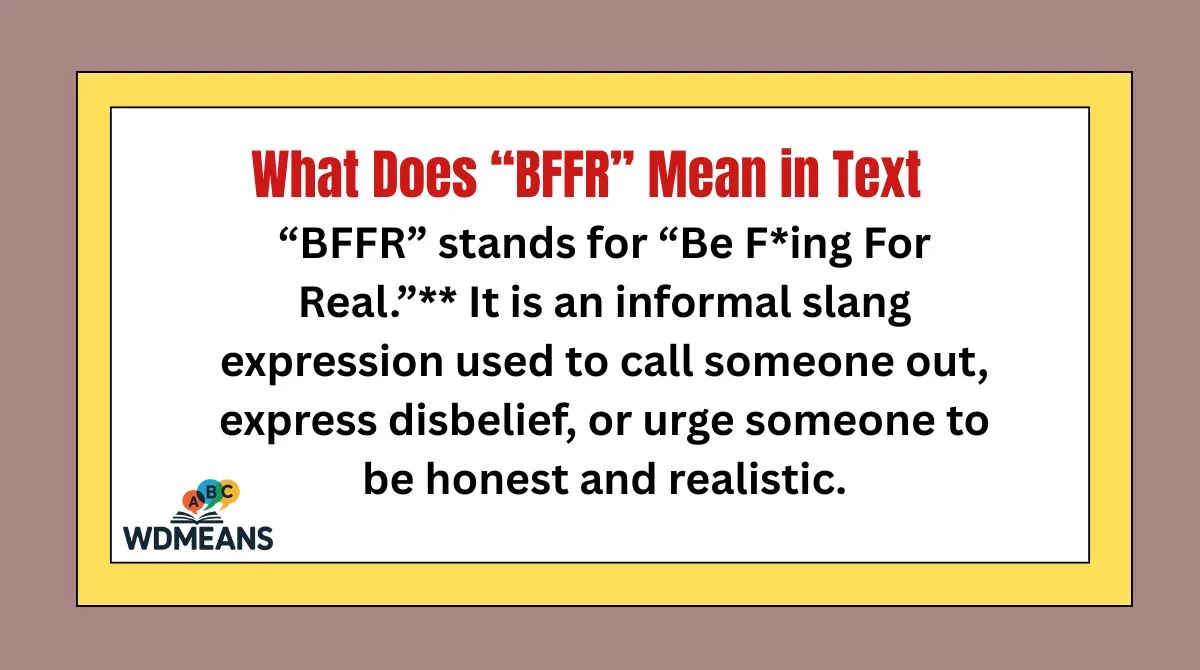
“BFFR” stands for “Be F*ing For Real.”** It is an informal slang expression used to call someone out, express disbelief, or urge someone to be honest and realistic.
At its core, the phrase conveys skepticism or frustration. When someone uses “BFFR,” they are often reacting to a statement they find exaggerated, unrealistic, or untrue. It can also imply, “You can’t be serious,” or “Please be realistic.”
For example:
- “You think you’ll finish that in five minutes? BFFR.”
- “He said he didn’t see the message? BFFR.”
The tone can range from playful teasing to mild annoyance, depending on the relationship between speakers. While it may sound harsh due to the implied profanity, it’s commonly used in a lighthearted or sarcastic way in informal settings.
Background
The phrase “BFFR” emerged from internet culture, particularly within social media communities where brevity and expressiveness are highly valued. Like many slang terms, it evolved from spoken language into a shortened acronym for faster typing and stronger emphasis.
Its popularity grew significantly on platforms like TikTok and Twitter, where users often react quickly to content. The abbreviation allows users to convey strong emotions in just four letters, making it ideal for comment sections and short-form communication.
The phrase itself is not entirely new—it originates from the longer expression “be for real,” which has been used in spoken English for years. The addition of emphasis (the “F***ing”) intensifies the sentiment, making it more impactful.
As online communication continues to shape language, terms like “BFFR” demonstrate how users adapt traditional phrases into modern, concise formats that fit digital environments.
Usage in Different Contexts (Chat, Social Media, Professional Fields)
“BFFR” is primarily used in informal communication, especially in chats and on social media. In personal messaging, it often appears between friends who are comfortable using casual or slightly edgy language.
On social media platforms, it’s commonly used in comments or captions to react to posts. For instance, someone might reply “BFFR” to a controversial opinion or exaggerated claim. It’s a quick way to express disbelief without writing a long response.
However, in professional fields, the use of “BFFR” is generally inappropriate. Its informal tone and implied profanity make it unsuitable for emails, reports, or workplace communication. In such settings, more neutral expressions like “please clarify” or “that seems unlikely” are preferred.
Understanding where and when to use “BFFR” is crucial. While it works well in casual conversations, using it in formal environments can come across as unprofessional or disrespectful.
Meaning in Chat, WhatsApp, Instagram, TikTok
Across messaging apps and social platforms, “BFFR” maintains a consistent meaning but varies slightly in tone.
- Chat & WhatsApp: Often used among friends in a conversational tone. It may come across as teasing rather than confrontational.
- Instagram: Commonly appears in comments reacting to posts, especially when users find something unrealistic or exaggerated.
- TikTok: Widely used in captions and comment sections, often paired with humorous or dramatic content. It can amplify reactions and add emphasis to opinions.
For example:
- “You said you woke up at 5 AM every day? BFFR 😂”
- “This outfit is worth $10,000? BFFR.”
In these contexts, emojis or tone indicators often soften the expression, making it more playful than harsh.
Meaning in Physics, Medical, and Aircraft Terminology
Interestingly, “BFFR” does not have a widely recognized meaning in technical fields like physics, medicine, or aviation. Unlike some acronyms that carry multiple interpretations across industries, “BFFR” is almost exclusively associated with internet slang.
In rare cases, similar letter combinations may appear as internal codes or abbreviations in specific organizations, but they are unrelated to the slang meaning. Therefore, if you encounter “BFFR” in a scientific or professional document, it likely has a completely different, context-specific definition—or it may simply be informal usage that slipped into the text.
This distinction is important because misinterpreting slang in technical contexts could lead to confusion.
Common Misconceptions
One common misconception is that “BFFR” always carries a negative or aggressive tone. While it can express frustration, it is often used jokingly among friends.
Another misunderstanding is that it means “Best Friends For Real,” which is incorrect. Although it resembles “BFF” (Best Friends Forever), the added “R” changes the meaning entirely.
Some people also assume it is universally acceptable in all conversations. In reality, its informal and slightly explicit nature makes it unsuitable for formal communication.
Similar Terms & Alternatives
There are several expressions that convey similar meanings to “BFFR,” including:
- “Be serious”
- “Come on”
- “No way”
- “You’re joking, right?”
- “That’s unrealistic”
These alternatives are often more appropriate in formal or semi-formal settings. While “BFFR” is concise and expressive, choosing the right phrase depends on tone and audience.
How to Respond to It
Responding to “BFFR” depends on the context and intent behind it.
- If playful: You can respond humorously, such as “I am being real!”
- If questioning your statement: Clarify your point with more details.
- If confrontational: Stay calm and explain your perspective without escalating the tone.
Understanding the intent behind the message helps you choose an appropriate and effective response.
Differences from Similar Words
“BFFR” differs from phrases like “LOL” or “OMG” because it directly challenges or questions a statement rather than expressing emotion alone.
Compared to “BFF” (Best Friends Forever), which conveys affection, “BFFR” conveys skepticism or disbelief. The intent behind each acronym is entirely different, even though they look similar.
This distinction highlights the importance of context in interpreting internet slang correctly.
Relevance in Online Conversations & Dating Apps
In online conversations and dating apps, “BFFR” is often used to react to profiles, messages, or claims that seem unrealistic. For example, someone might use it when they feel another person is exaggerating achievements or expectations.
However, using it in dating conversations should be done carefully. It can come across as blunt or dismissive if the other person is not familiar with the tone. In casual or humorous exchanges, it may work well, but in early interactions, a softer approach is usually better.
Overall, its relevance lies in its ability to quickly express disbelief, making it a popular choice in fast-moving digital interactions.
Conclusion
“BFFR” is a modern slang acronym that reflects the evolving nature of digital communication. While it may seem confusing at first, its meaning—urging someone to be realistic or honest—is straightforward once understood.
Its widespread use on social media and messaging platforms highlights how language continues to adapt to shorter, more expressive formats.
However, context is key. While it works well in casual conversations, it should be avoided in formal settings. Understanding when and how to use “BFFR” ensures clear communication and helps you stay in sync with current online trends.

I am Alexander Hayes, creator of WDMEANS, dedicated to simplifying English learning through clear word meanings. I help learners improve vocabulary with easy, accurate, and practical explanations for everyday use online.