If you’ve ever received a message containing “ASL” and felt unsure about its meaning, you’re not alone. This short abbreviation has been widely used across the internet for years, but its meaning can vary depending on context.
Many people search for it because they encounter it in chats, social media platforms, or even professional discussions and want clarity before responding.
Understanding what “ASL” means in text is important because misinterpreting it can lead to confusion or awkward conversations.
While it originally gained popularity in early online chatrooms, its usage has evolved significantly over time. Today, it can represent anything from a casual question to a technical term in specific fields.
This article breaks down its meanings, origins, and uses so you can confidently understand and respond to it in any situation.
Meaning & Definition
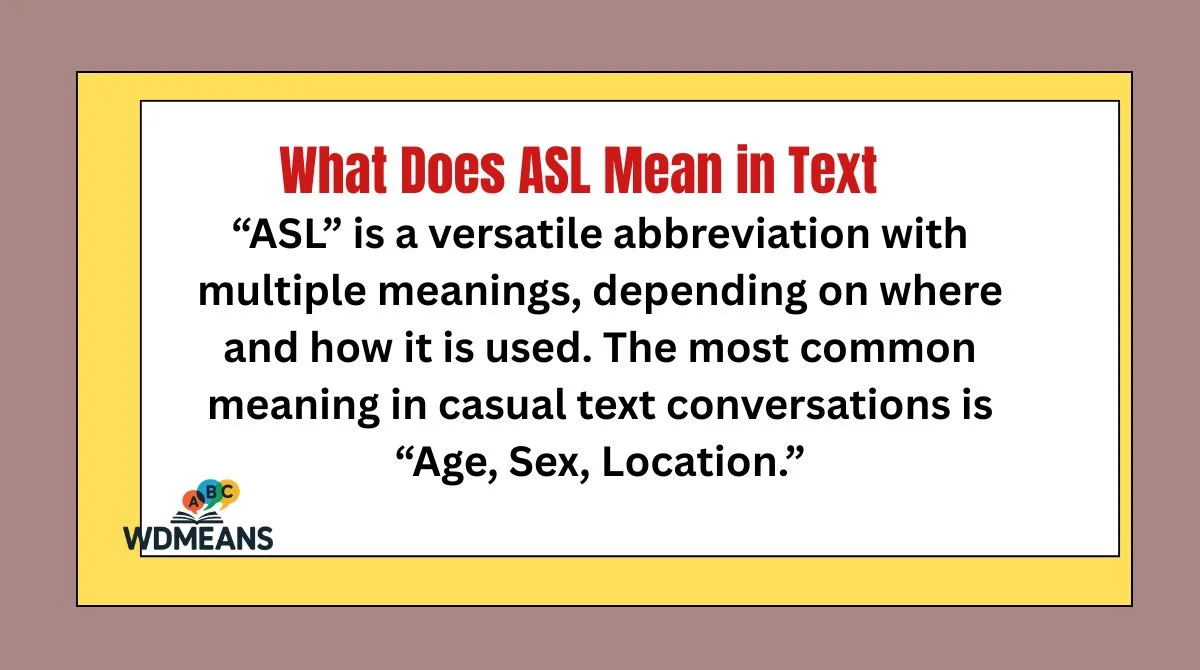
“ASL” is a versatile abbreviation with multiple meanings, depending on where and how it is used. The most common meaning in casual text conversations is “Age, Sex, Location.” It is typically used as a quick way to ask someone basic personal information when starting a conversation online.
However, “ASL” can also stand for “American Sign Language,” especially in educational, accessibility, or professional contexts. In this case, it refers to the visual language used by the Deaf and partially -of-hearing community in the United States.
In more technical or specialized environments, “ASL” may have entirely different meanings. For example, in aviation, it stands for “Above Sea Level,” which is used to measure altitude. In medical or scientific contexts, it can also refer to specific terms depending on the field.
Because of these varied definitions, context plays a crucial role. A casual message like “hey, asl?” is very different from a discussion about altitude or communication methods. Recognizing the situation helps you determine the correct interpretation.
Background
The abbreviation “ASL” became popular during the early days of the internet, particularly in chatrooms and instant messaging platforms in the late 1990s and early 2000s. At that time, online anonymity was common, and users often wanted a quick way to learn basic details about the person they were talking to.
Typing “Age, Sex, Location” repeatedly was time-consuming, so “ASL” emerged as a convenient shorthand. It quickly became part of internet culture and was widely recognized among early users of platforms like IRC, AOL chatrooms, and MSN Messenger.
As technology evolved, so did the meaning and usage of “ASL.” With the rise of social media platforms and messaging apps, the abbreviation spread globally. At the same time, awareness of “American Sign Language” also increased, especially with more inclusive communication practices online.
Today, “ASL” carries both its original informal meaning and its formal interpretations. Its adaptability is a key reason why it remains relevant even decades after its initial rise in popularity.
Usage in Different Contexts (Chat, Social Media, Professional Fields)
In casual chats, “ASL” is usually used to start conversations. Someone might send it as a quick introduction question, especially when talking to strangers online. It’s often seen in gaming chats, forums, or messaging apps where users are getting to know each other.
On social media platforms, the meaning can shift slightly. While some users still use it in its original sense, others may use it humorously or ironically. In certain cases, it might also refer to “American Sign Language,” particularly in content related to accessibility or education.
In professional or academic settings, “ASL” is rarely used to mean “Age, Sex, Location.” Instead, it almost always refers to “American Sign Language” or technical terms like “Above Sea Level.” For example, in aviation reports or geographic studies, “ASL” is a standard measurement term.
Understanding the environment in which the term appears is essential. The same three letters can carry completely different meanings depending on whether you’re chatting casually or reading a technical document.
Meaning in Chat, WhatsApp, Instagram, TikTok
On platforms like WhatsApp, Instagram, and TikTok, “ASL” is most commonly used in its casual form: “Age, Sex, Location.” It’s often sent in direct messages, especially when someone is trying to get to know another person quickly.
On TikTok, however, the abbreviation can sometimes be used in a humorous or outdated way, referencing early internet culture. Users might include it in captions or comments as a joke or nostalgic reference.
On Instagram, it may appear in DMs, though it is less common than before due to changing communication styles. Many users now prefer more natural conversation starters instead of abbreviations.
Despite its declining popularity in some areas, “ASL” still appears enough that understanding it remains useful. The tone and context of the conversation usually make its meaning clear.
Meaning in Physics, Medical, and Aircraft Terminology
In technical fields, “ASL” takes on entirely different meanings.
In aviation and geography, “ASL” stands for “Above Sea Level.” It is used to describe altitude or elevation relative to sea level. For example, pilots rely on this measurement for navigation and safety.
In medical contexts, “ASL” can refer to specialized terms depending on the subject. It might be used in research or documentation, though it is less universally standardized than in aviation.
In physics or environmental science, “ASL” may also appear in discussions about elevation and atmospheric pressure, as altitude plays a key role in these areas.
These meanings are precise and technical, making them very different from the casual internet usage. This highlights the importance of recognizing the setting in which the term appears.
Common Misconceptions
One common misconception is that “ASL” always means “Age, Sex, Location.” While this is true in many casual conversations, it is not the only meaning.
Another misunderstanding is assuming it always refers to “American Sign Language.” This can lead to confusion, especially when the abbreviation is used in informal chats.
Some people also believe it is outdated and no longer used. While its popularity has declined, it still appears in certain online communities and conversations.
Misinterpreting “ASL” can lead to awkward or incorrect responses, so it’s always best to consider the context before assuming its meaning.
Similar Terms & Alternatives
Instead of using “ASL,” many people now prefer more natural conversation starters. Examples include:
- “How old are you?”
- “Where are you from?”
- “Tell me about yourself”
In professional settings, abbreviations are usually avoided altogether to maintain clarity.
For “American Sign Language,” alternatives might include simply writing out the full term or using context-specific language like “sign language.”
These alternatives help reduce confusion and make communication more direct and comfortable.
How to Respond to It
If someone sends you “ASL” in a chat, your response depends on your comfort level.
If you’re okay sharing information, you can reply with your age, gender, and location. For example: “25, male, Karachi.”
If you’re not comfortable, you can politely decline or redirect the conversation. For instance: “I’d rather not share that, but nice to meet you!”
In professional or technical contexts, you should respond based on the intended meaning. For example, if it refers to altitude, provide the relevant data rather than personal details.
Always prioritize your privacy and safety when responding to such questions online.
Differences from Similar Words
“ASL” can sometimes be confused with other abbreviations, but it has distinct meanings.
For example, “A/S/L” (with slashes) is simply a stylized version of the same term. Meanwhile, abbreviations like “DM” (direct message) or “IDK” (I don’t know) serve entirely different purposes in communication.
“ASL” is unique because it can represent both informal and formal concepts, depending on context. This dual nature sets it apart from most other abbreviations.
Relevance in Online Conversations & Dating Apps
In online conversations and dating apps, “ASL” still appears occasionally, especially among users familiar with older internet culture. It is often used as a quick way to gather basic information before continuing a conversation.
However, many modern users consider it outdated or even intrusive. Dating apps now encourage more engaging and personalized introductions rather than simple abbreviations.
Despite this shift, understanding “ASL” remains relevant. It helps you navigate conversations, recognize intent, and respond appropriately when you encounter it.
Knowing its meaning also allows you to avoid misunderstandings and communicate more effectively in digital spaces.
Conclusion
“ASL” is a simple abbreviation with a surprisingly wide range of meanings. From its origins in early internet chatrooms to its use in technical fields like aviation, it has evolved significantly over time.
While it most commonly stands for “Age, Sex, Location” in casual conversations, it can also represent “American Sign Language” or “Above Sea Level” depending on context.
Understanding these differences is essential for clear communication. By recognizing where and how it is used, you can respond appropriately and avoid confusion.
Whether you encounter it in a chat, social media, or a professional setting, knowing what “ASL” means ensures you stay informed and confident in your interactions.

I am Alexander Hayes, creator of WDMEANS, dedicated to simplifying English learning through clear word meanings. I help learners improve vocabulary with easy, accurate, and practical explanations for everyday use online.