One such commonly used term is “WYO.” If you’ve ever received this message and paused to figure out its meaning, you’re not alone.
Many people search for it because it appears frequently in text messages, social media chats, and dating apps.
Understanding these abbreviations helps improve communication and prevents confusion, especially when tone and intent are not always clear in written messages.
“WYO” is short, simple, and often used casually, but its meaning can vary depending on the situation.
That’s why it’s important to understand not only what it stands for, but also how it’s used across different platforms and contexts.
This guide will break down everything you need to know about “WYO,” from its definition and origins to how you can respond confidently when someone sends it to you.
Meaning & Definition
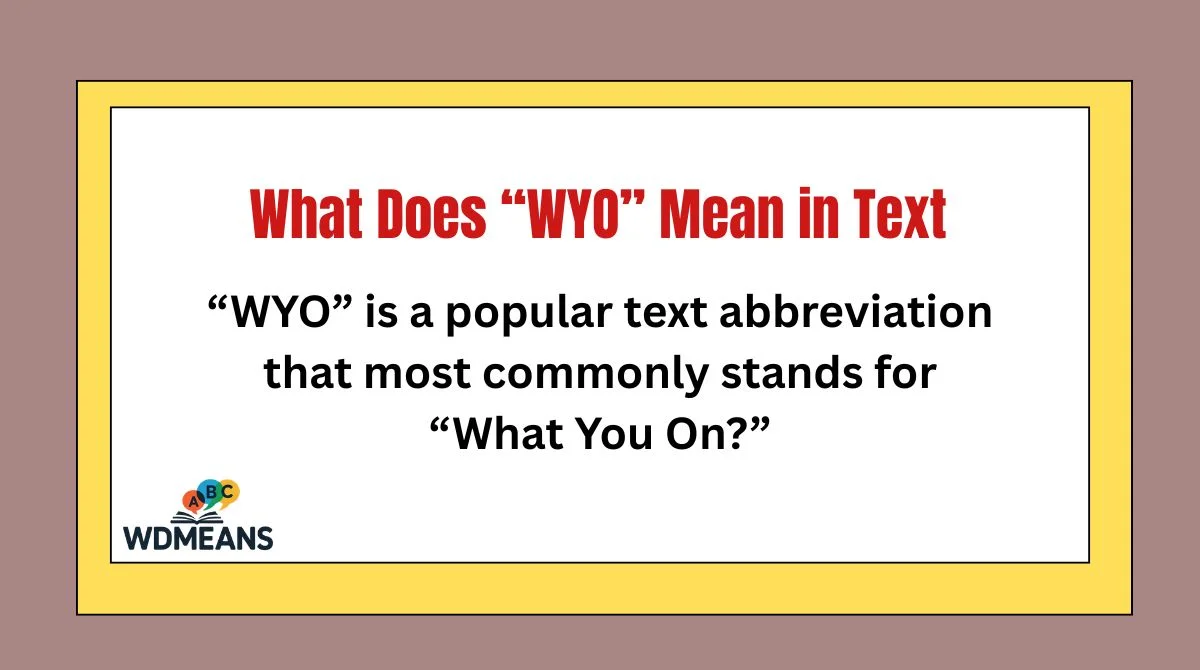
“WYO” is a popular text abbreviation that most commonly stands for “What You On?”
In simple terms, it is a casual way of asking someone what they are doing, what they are up to, or what their current plans are. It is similar to phrases like “What’s up?” or “What are you doing right now?” but tends to feel slightly more informal and conversational.
For example:
- “Hey, WYO?”
- “WYO tonight?”
In these examples, the sender is trying to start a conversation or check someone’s availability. It’s often used as an opener rather than a detailed question.
The tone of “WYO” is usually relaxed and friendly, but it can also carry subtle implications depending on context. Sometimes, it may suggest interest in meeting up, continuing a conversation, or simply staying connected. Because it is so brief, the exact meaning often depends on the relationship between the people communicating.
Background
The rise of abbreviations like “WYO” is closely tied to the evolution of digital communication. As texting and instant messaging became more popular, users began shortening phrases to save time and effort. This trend became even more widespread with the growth of smartphones and social media platforms.
“WYO” likely emerged from urban slang and informal spoken language before transitioning into text form. The phrase “What you on?” has been used in spoken English for years, particularly in casual conversations among younger groups. When texting culture grew, it was naturally shortened into “WYO.”
Platforms like SMS, chat apps, and social media encouraged brevity, making acronyms like this more common. Over time, “WYO” became part of everyday digital vocabulary, especially among teens and young adults. Today, it is widely recognized across different regions and cultures, although its usage may still vary slightly depending on context.
Usage in Different Contexts (Chat, Social Media, Professional Fields)
“WYO” is primarily used in informal settings, but its meaning can shift depending on where and how it appears.
In casual chat, it serves as a conversation starter. It’s quick and easy, making it ideal for checking in with friends. In social media, it may appear in comments, captions, or direct messages as a way to engage others. For example, someone might post “WYO tonight?” to invite responses or interactions.
However, in professional fields, “WYO” is rarely appropriate. Business communication typically requires clear and formal language, so abbreviations like this can come across as unprofessional or unclear. Instead, full phrases such as “What are you working on?” or “What are your plans?” are preferred.
Understanding where to use “WYO” is important. While it works well in relaxed conversations, it should be avoided in formal emails, workplace chats, or official documents.
Meaning in Chat, WhatsApp, Instagram, TikTok
Across popular platforms, “WYO” retains its core meaning but adapts slightly to the tone of each space.
- Chat & WhatsApp: Used as a direct question to check what someone is doing. It’s common in one-on-one conversations.
- Instagram: Often appears in DMs or comments. It can be a casual way to reconnect or show interest in someone’s activities.
- TikTok: May appear in captions or comments, sometimes as part of trends or playful interactions.
On these platforms, “WYO” is often linked to social engagement. It may also hint at wanting to hang out, especially if used late in the day or during weekends. Tone, timing, and relationship all play a role in how it is interpreted.
Meaning in Physics, Medical, and Aircraft Terminology
Unlike some abbreviations that have technical meanings, “WYO” is not widely recognized in formal fields like physics, medicine, or aviation.
- In physics, it has no established definition or formula.
- In medical terminology, it is not a standard abbreviation used in clinical settings.
- In aircraft or aviation, it is not a recognized code or term.
However, confusion can arise because many technical fields use acronyms extensively. Someone unfamiliar with slang might assume “WYO” has a technical meaning when it does not. In professional or academic contexts, it is always best to rely on officially recognized abbreviations.
Common Misconceptions
There are several misunderstandings about “WYO.”
One common misconception is that it always means something serious or specific. In reality, it is usually just a casual greeting or question. Another misconception is that it implies urgency or importance, which is not necessarily true.
Some people also confuse it with other abbreviations or assume it has multiple meanings in different fields. While context can slightly change its tone, its primary meaning remains consistent in casual communication.
Understanding these misconceptions helps avoid overthinking or misinterpreting messages.
Similar Terms & Alternatives
“WYO” is part of a larger group of informal expressions used in texting. Similar phrases include:
- “WYD” (What You Doing)
- “Sup” (What’s up)
- “HMU” (Hit Me Up)
- “What’s good?”
- “You free?”
Each of these has a slightly different tone, but they all serve a similar purpose: starting a conversation or checking someone’s availability.
Choosing the right one depends on your style and the level of familiarity with the other person.
How to Respond to It
Responding to “WYO” is simple and depends on your situation.
If you’re available:
- “Just chilling, you?”
- “Not much, what’s up?”
If you’re busy:
- “Working right now, catch up later?”
If you’re interested in meeting:
- “Nothing much, wanna hang out?”
Your response can shape the direction of the conversation. Keeping it clear and friendly helps maintain good communication.
Differences from Similar Words
While “WYO” is similar to “WYD,” there are subtle differences.
- “WYO” often implies plans or intentions, not just current activity.
- “WYD” focuses more on what someone is doing right now.
For example:
- “WYO tonight?” suggests future plans.
- “WYD?” asks about the present moment.
Understanding these differences helps you use each term more accurately.
Relevance in Online Conversations & Dating Apps
“WYO” is especially common in online conversations and dating apps. It serves as an easy way to break the ice without sounding too formal.
On dating platforms, it can signal interest or an attempt to start a casual conversation. However, because it is brief, it may sometimes come across as low effort. Adding a bit more context can make your message more engaging.
For example:
- Instead of “WYO,” try “WYO this weekend?”
This small change makes the conversation feel more intentional and meaningful.
Conclusion
“WYO” is a simple yet widely used abbreviation that reflects how modern communication has evolved.
It stands for “What You On?” and is mainly used in informal conversations to ask what someone is doing or planning.
While it is perfect for casual chats and social media, it should be avoided in professional settings.
Understanding its meaning, context, and variations helps you communicate more effectively and confidently.
As digital language continues to evolve, staying familiar with such terms ensures you remain connected and relevant in online interactions.

I am Alexander Hayes, creator of WDMEANS, dedicated to simplifying English learning through clear word meanings. I help learners improve vocabulary with easy, accurate, and practical explanations for everyday use online.