In today’s fast-paced digital world, abbreviations and acronyms dominate conversations. One such commonly used term is “ML.”
If you’ve ever received a message with “ML” and felt unsure about its meaning, you’re not alone. People search for this term because it can have multiple interpretations depending on the context—ranging from casual chats to technical fields.
Understanding what “ML” means in text is essential for clear communication, especially when messaging on social media, dating apps, or even in professional discussions.
This article breaks down the meaning, origin, and various uses of “ML,” helping you interpret it accurately in any situation.
Whether you’re chatting with friends or reading technical content, knowing the correct meaning behind “ML” can save you from confusion and even awkward misunderstandings.
Meaning & Definition
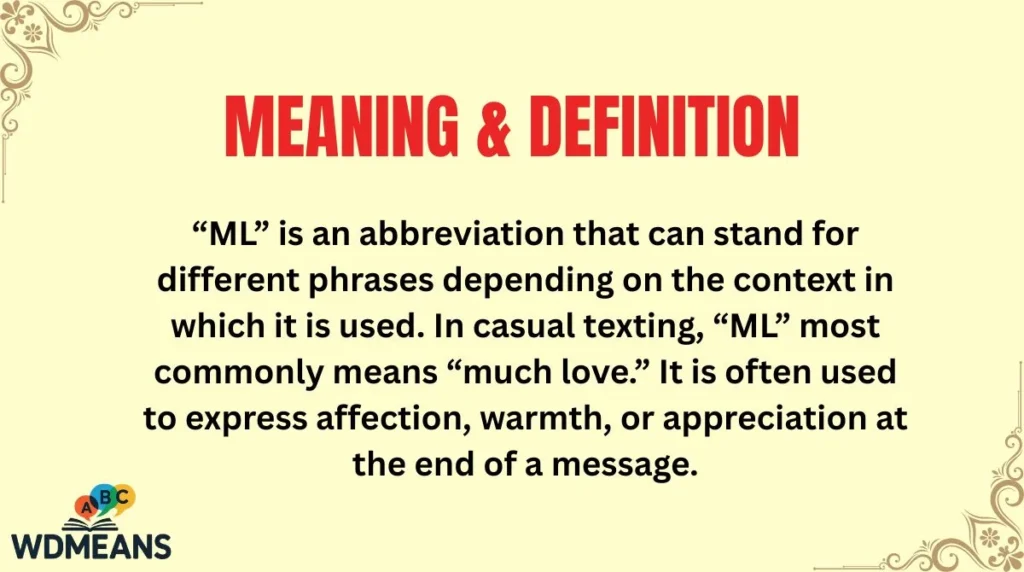
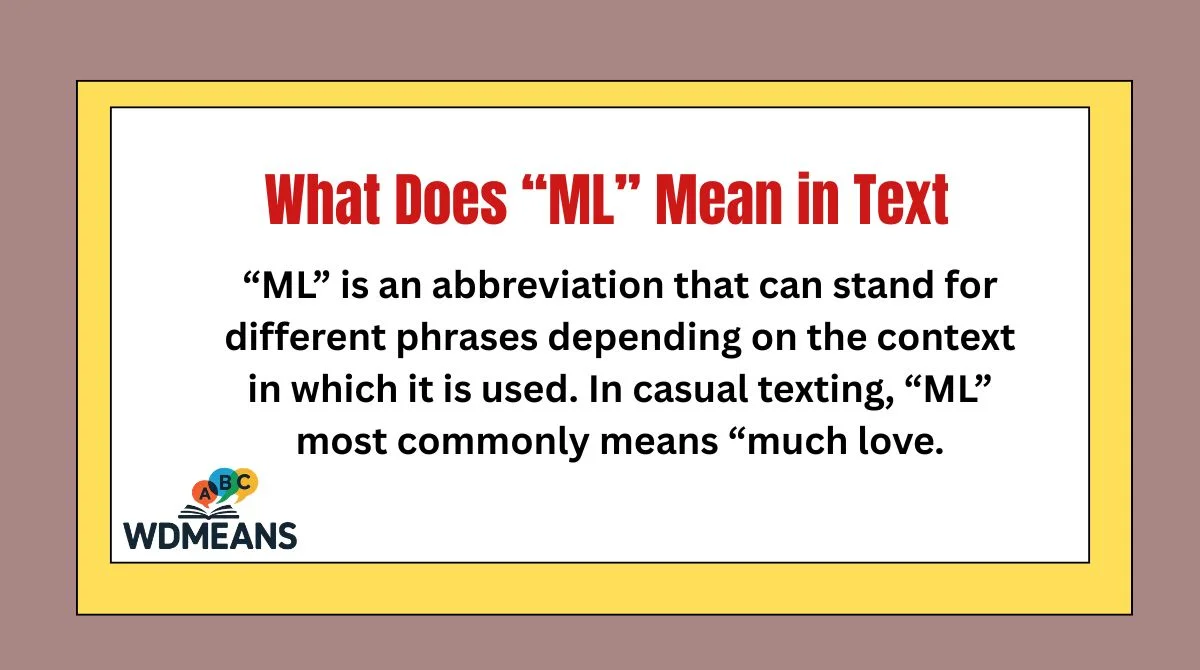
“ML” is an abbreviation that can stand for different phrases depending on the context in which it is used. In casual texting, “ML” most commonly means “much love.” It is often used to express affection, warmth, or appreciation at the end of a message. For example, someone might write, “Take care, ML,” to convey friendly or emotional closeness.
However, “ML” is not limited to emotional expression. In more technical or formal contexts, it may stand for “machine learning,” a branch of artificial intelligence focused on algorithms that learn from data. In scientific or measurement contexts, “ml” (lowercase) refers to milliliters, a unit of volume.
The key to understanding “ML” lies in recognizing the context. A casual conversation between friends will likely use it to express emotion, while academic or professional discussions may use it in a technical sense. Because of its versatility, “ML” is considered a multi-meaning acronym, and interpreting it correctly depends on tone, platform, and subject matter.
Background
The use of abbreviations like “ML” became popular with the rise of SMS texting and internet chatrooms in the early 2000s. Limited character counts encouraged users to shorten phrases, leading to the widespread adoption of acronyms such as “LOL,” “BRB,” and “ML.”
“ML” as “much love” originated from informal digital communication, particularly among younger users who wanted a quick way to express care or positivity. Over time, it became more mainstream and is now commonly used across various messaging platforms.
On the other hand, “ML” as “machine learning” has a completely different origin rooted in computer science. The term gained prominence as artificial intelligence technologies advanced, especially in the 2010s. Today, it is widely used in industries like technology, finance, and healthcare.
Meanwhile, the lowercase “ml” for milliliters has been a standard unit of measurement for decades, long before digital communication existed. It is part of the metric system and is commonly used worldwide.
The coexistence of these meanings reflects how language evolves across different domains—casual communication, scientific terminology, and technological innovation—all using the same abbreviation.
Usage in Different Contexts
“ML” can appear in various contexts, each carrying a distinct meaning. In everyday conversations, it is often used informally to express affection. For instance, a friend might text, “Miss you, ML,” indicating warmth and emotional connection.
In social media posts, “ML” can serve as a quick way to show appreciation or gratitude. Influencers and content creators may use it when thanking their followers, such as “Thanks for the support, ML!”
In professional settings, the meaning shifts entirely. Here, “ML” usually refers to machine learning, especially in discussions related to data science, programming, or artificial intelligence. For example, someone might say, “We’re implementing ML models to improve predictions.”
In academic or scientific writing, “ml” (lowercase) is used strictly as a unit of measurement. For example, “Add 50 ml of water” is a standard instruction in experiments or recipes.
Understanding the context—casual, social, professional, or scientific—is crucial to interpreting “ML” correctly. Misunderstanding it could lead to confusion, especially when switching between informal chats and formal discussions.
Meaning in Chat, WhatsApp, Instagram, TikTok
On messaging platforms like WhatsApp, Instagram, and TikTok, “ML” most commonly means “much love.” It is used to express affection, appreciation, or friendliness in a quick and simple way. For example:
- “Good night, ML ❤️”
- “Thanks for helping me today, ML!”
On these platforms, tone plays a big role. “ML” often appears alongside emojis, making it clear that the sender intends a positive and warm message.
However, on platforms like TikTok, where content can be more diverse, “ML” might occasionally refer to “machine learning,” especially in educational or tech-related videos. Still, this is less common in everyday interactions.
In direct messages and comments, the emotional meaning dominates. It is especially popular among friends, couples, and online communities where quick expressions of care are valued.
Meaning in Physics, Medical, and Aircraft Terminology
In technical fields, “ml” (usually lowercase) has precise meanings:
- Physics & Science: “ml” stands for milliliters, a unit used to measure volume in experiments and calculations.
- Medical Field: It is widely used to measure liquid medications, such as “Take 5 ml of syrup.” Accuracy is crucial in this context.
- Aviation: While less common, “ML” can sometimes refer to specific abbreviations or codes depending on the system being used, though it is not a universal aviation standard.
In these fields, “ml” is strictly numerical and scientific, with no emotional or conversational meaning. Misinterpreting it here could lead to serious errors, especially in medical or laboratory settings.
Common Misconceptions
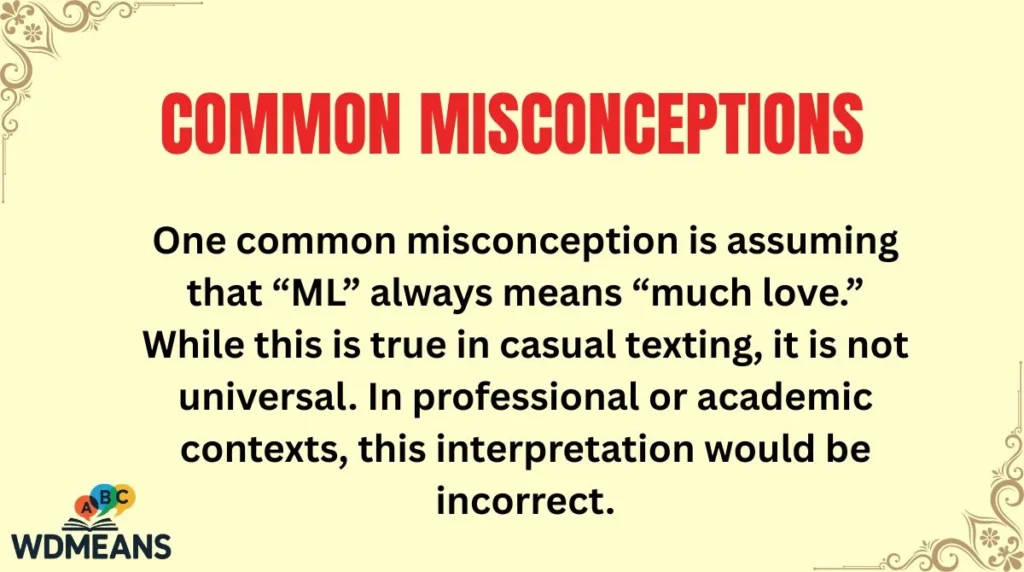
One common misconception is assuming that “ML” always means “much love.” While this is true in casual texting, it is not universal. In professional or academic contexts, this interpretation would be incorrect.
Another misunderstanding is confusing uppercase “ML” with lowercase “ml.” The capitalization can change the meaning entirely. For example, “ML engineer” refers to machine learning, while “ml” in a recipe refers to milliliters.
Some people also assume “ML” is a widely recognized abbreviation in all industries, which is not always the case. Its meaning can vary significantly depending on the field.
Similar Terms & Alternatives
There are several similar abbreviations and phrases that serve the same purpose as “ML” in casual communication:
- “ILY” – I love you
- “LY” – Love you
- “XOXO” – Hugs and kisses
- “❤️” emoji – Universal symbol of love
In technical contexts, alternatives depend on the meaning:
- For machine learning: “AI,” “DL” (deep learning)
- For milliliters: “cc” (cubic centimeters, though less commonly used now)
How to Respond to It
Responding to “ML” depends on the tone of the conversation. If it’s used affectionately, you can reply with:
- “ML too!”
- “Sending love back ❤️”
- “Aww, thank you!”
If it appears in a professional or technical discussion, respond based on the context. For example, if someone mentions “ML models,” you might reply with a relevant technical comment.
Understanding the intent behind “ML” helps you respond appropriately and maintain effective communication.
Differences from Similar Words
“ML” differs from other abbreviations mainly in its versatility. Unlike “LOL,” which almost always means “laugh out loud,” “ML” can have emotional, technical, or scientific meanings.
For example:
- “ML” (much love) vs. “ILY” (stronger emotional expression)
- “ML” (machine learning) vs. “AI” (broader concept)
- “ml” (milliliters) vs. “L” (liters, a larger unit)
These differences highlight the importance of context and capitalization when interpreting the term.
Relevance in Online Conversations & Dating Apps
In online conversations and dating apps, “ML” is commonly used to express warmth and friendliness without being overly intense. It strikes a balance between casual and affectionate, making it ideal for early-stage interactions.
For example, someone might say, “Had a great time chatting, ML!” This conveys interest and positivity without sounding too serious. It helps build rapport and maintain a friendly tone.
Because digital communication often lacks facial expressions and tone, small abbreviations like “ML” play a big role in conveying emotion and intent. This makes it a valuable tool in modern online interactions.
Conclusion
“ML” is a versatile abbreviation with multiple meanings, ranging from “much love” in casual texting to “machine learning” in professional contexts and “milliliters” in scientific usage.
Understanding its meaning depends entirely on the situation, tone, and platform where it appears. By recognizing these differences, you can avoid confusion and communicate more effectively.
Whether you’re chatting with friends, browsing social media, or reading technical content, knowing how to interpret “ML” ensures clarity and confidence in your interactions.

I am Alexander Hayes, creator of WDMEANS, dedicated to simplifying English learning through clear word meanings. I help learners improve vocabulary with easy, accurate, and practical explanations for everyday use online.